
This article includes gambling-related content. Irishblogs.ie is committed to providing accurate and responsible information. To ensure the highest standards of quality and safety, all gambling-related content is curated and verified by industry experts. Please engage responsibly!
What Happened on the First of July
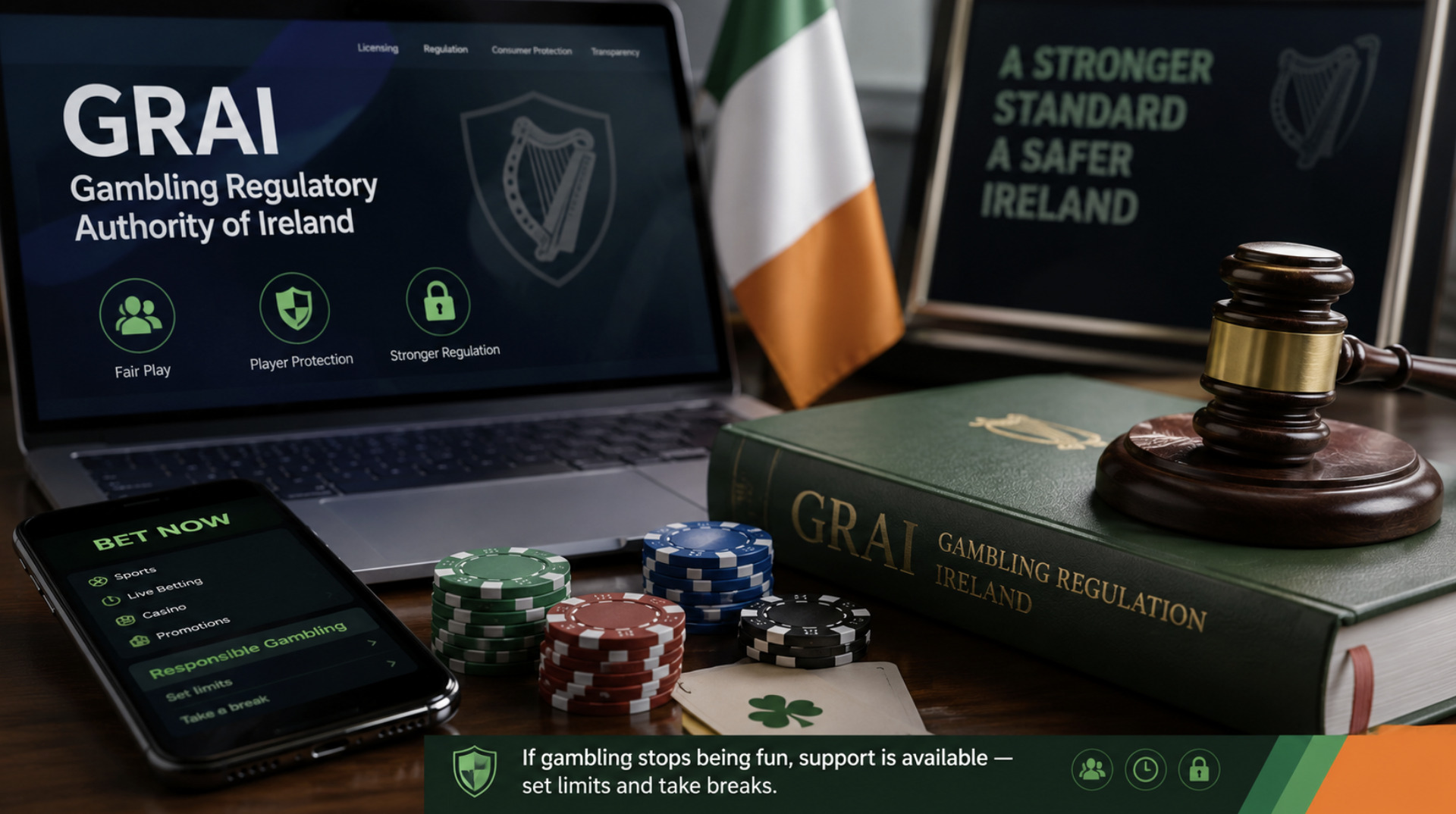
Since 1 July, every online betting operator serving Irish customers — whether a household name or a new entrant — needs a remote betting licence issued by the GRAI. This replaces the old regime run by Revenue, which was in substance a tax registration rather than genuine oversight. The GRAI opened its application portal to operators back on 9 February, and the first licences were granted on schedule at the start of this month.
The sequencing matters. Online betting goes first; licences for in-person betting (bookmaker shops) are due to follow later this year, and further licence types covering online gaming will roll out after that. So the regime is arriving in waves — but the wave that matters most for the average Irish punter, online betting, has now landed.
Ireland's new gambling laws explained for players
The Protections a Licensed Operator Must Give You
A GRAI licence is not a rubber stamp. To hold one, an operator signs up to obligations that are directly about protecting the customer, and several of them address the oldest complaints in Irish gambling.
The concrete ones to know: operators must verify age robustly to keep under-18s out; they are obliged to actually pay out winnings — turning the classic "confiscated withdrawal" dispute from a customer-service argument into a regulatory breach; and they may not accept credit cards or otherwise facilitate gambling on credit. Borrowed-money gambling is one of the fastest routes to harm, and cutting the credit card off at the cashier is one of the most practical protections in the entire framework.
These sit alongside the advertising rules we covered earlier this year — the watershed on broadcast advertising, the ban on inducements like free bets targeted at problem players, and tight limits on sponsorship. Together they form one picture: the product can operate, but the aggressive machinery around it is being dismantled piece by piece.
Fines That Operators Cannot Shrug Off
Enforcement is where past Irish gambling law always fell down, and it is where the new regime is most different. The GRAI can impose sanctions of up to €20 million or 10% of an operator's turnover, whichever is higher. For a large international bookmaker, 10% of turnover is an existential number, not a cost of doing business.
That is the real reason the licence list matters to players. An unlicensed site has nothing at stake in Ireland: no licence to lose, no fine it intends to pay, no regulator it answers to. A licensed one has both a legal presence and a financial incentive measured in millions to treat Irish customers within the rules.
What This Means for the Sites You Use
The practical takeaway is a short checklist. First, expect licensed operators to say so — licence status will become the loudest trust signal in the Irish market, and sites that hold one will display it. Second, expect some familiar names to leave: operators unwilling to meet the compliance bar tend to quietly withdraw from newly regulated markets rather than apply. Third, be sceptical of any site that continues to serve Irish customers while sidestepping the regime — offshore operators beyond the GRAI's reach are precisely the ones where none of the protections above apply.
It is also worth understanding what a licence does not do. It does not make gambling safe in the way a seatbelt makes a car safer — the house edge is untouched, and the experience is engineered to keep you playing. The regulator constrains the operator; managing your own play is still yours to do.
How modern online casinos design their user experience. What experienced players look for before choosing an online casino
The Bigger Rollout Still to Come
The GRAI's work programme continues through the rest of the year and beyond: in-person betting licences are expected to open before the year is out, with online gaming licence types following in later phases. A national exclusion register — a single self-exclusion covering all licensed operators at once — is among the flagship protections planned under the Act, and its arrival will be a genuine turning point for anyone who wants one decision to stick everywhere. We will cover each phase here as it lands.
For now, the milestone is real. Ireland has gone from one of Europe's most loosely governed gambling markets to one with a licensing regime, hard consumer obligations and eight-figure penalties — in the space of a single summer.
Why two slots with the same RTP feel completely different
Looking for operators that treat withdrawals properly? Fast, clean payouts are exactly the behaviour the new licensing regime is designed to enforce. See our current list of fast payout casinos reviewed by the Dublin Gambler — updated as the licensed market takes shape.