
This piece is not about predicting where prices will go. Nobody knows, and the people who claim to know are guessing with more confidence than the evidence warrants. What this piece is about is understanding what is actually happening in the Irish housing market right now — what the data says, what it does not say, what the gap between the headline number and the lived experience looks like, and what the policy landscape means for people at different stages of the buying process.
The CSO's Residential Property Price Index for the year to January showed prices rising 7%. That is the headline figure that received most of the coverage when it was released in March. It is accurate. It is also somewhat misleading if it is the only number you look at, because the 7% national average conceals a significant gap between Dublin and the rest of the country. In Dublin, price growth was running at 5.3%. Outside Dublin, it was running at 9.2%. The places where prices are rising fastest are not the places with the most supply pressure — they are often the places where demand has followed workers seeking affordability, only to find that affordability is also deteriorating there.
The national median sale price now stands around €385,000. In Dublin that figure is approximately €475,000, while elsewhere in the country it sits around €340,000. These are not asking prices — they are transaction prices, which is an important distinction because asking prices frequently reflect optimism rather than reality. The gap between asking and selling varies by location and market conditions, but in the current market that gap has been narrowing as demand outpaces supply in most parts of the country.
What Mortgages Actually Cost Right Now
The average Irish mortgage rate in 2026 sits around 3.58%. That figure represents a meaningful improvement from the peaks of 2023, when rates were significantly higher following the ECB's aggressive tightening cycle. The improvement is real and it has had a real effect on affordability calculations — but the ECB has signalled a pause in further reductions, meaning the assumption that rates will continue to fall from here is not supported by what the central bank has communicated.
To translate percentages into monthly realities: on a €300,000 mortgage at 3.58% over 30 years, the monthly repayment is approximately €1,360. On a €400,000 mortgage at the same rate and term, it is approximately €1,810. On a €475,000 mortgage, which is closer to the Dublin median, the monthly repayment at 3.58% over 30 years is approximately €2,155. For a single person earning the national median wage of around €44,000 — which translates to roughly €2,900 per month take-home — that €2,155 repayment represents 74% of monthly net income. Before utilities, transport, food, childcare, or anything else.
The income multiple rules make the arithmetic even more specific. First-time buyers can borrow up to 4 times gross annual income. At the national median salary of €44,000, that is a maximum mortgage of €176,000. For a property at the national median price of €385,000, the required deposit is therefore €209,000. That is not a typo. The maximum mortgage available to someone earning the national median income does not come close to covering the national median house price.
This is the gap that the headline figures do not communicate. When analysts describe the market as having cooled or as being more accessible than it was at the 2022 peak, they are comparing very high prices to extremely high prices. For the majority of single-income buyers, the arithmetic of homeownership in Ireland in 2026 does not work without either a very high income, significant family help, or both.
Couples fare better, obviously. A household with two median incomes can in principle borrow up to €352,000, and with a 10% deposit of €38,500 on a median-priced property, the remaining gap is manageable with sustained saving. But two-income households with children face childcare costs that represent a third full-time salary in many cases, and the trade-off between childcare expenditure and saving for a deposit is one of the defining financial pressures for Irish families in their thirties.
The Supply Picture — Honest Accounting
Ireland is not building enough houses. This is not a controversial statement — it is a mathematical one. Experts estimate the country needs between 45,000 and 50,000 new homes annually to meet demand created by population growth, household formation, and the backlog from the years of underbuilding between 2009 and 2017. In 2025, approximately 34,500 homes were completed, the highest figure in over a decade.
That is progress. It is also a gap of between 10,500 and 15,500 homes per year between what is being built and what is needed. At that rate, the structural undersupply does not close — it grows more slowly, but it does not close. The backlog of unmet housing need, accumulated over more than a decade of underbuilding relative to demand, is not being addressed by the current trajectory of completions.
There was a genuine positive signal in 2025: the number of new homes granted planning permission increased by 7.9% year on year. Planning permissions are a leading indicator — they represent homes that might be built in the next 12 to 36 months. But the gap between permission and completion is real and persistent in Irish construction. Permissions get granted, then face financing challenges, construction cost inflation, labour shortages, and delays in servicing infrastructure. The 7.9% increase in permissions is worth noting. It does not, on its own, solve the supply problem.
What the Government Policy Landscape Actually Does
The Help to Buy scheme continues to offer first-time buyers a tax rebate of up to €30,000 on qualifying new homes — specifically a refund of income tax and DIRT paid over the previous four years, up to 10% of the purchase price. For someone purchasing a newly built home at €300,000, this represents a meaningful contribution to a deposit. The scheme has been extended and expanded several times since its introduction and the Government has signalled it will remain available to buyers purchasing before the end of this year.
Help to Buy applies only to new builds, which is both its strength and its limitation. New builds represent a minority of transactions in the Irish property market. In Dublin, the choice between a new build in a development on the city periphery and a second-hand property closer to the centre involves trade-offs between grant eligibility and location that many buyers find difficult to navigate.
The First Home Scheme — a shared equity product through which the state and participating lenders take an equity stake in a property, allowing the buyer to bridge the gap between their mortgage capacity and the purchase price — has had slower uptake than projected, partly because of the complexity of the product and partly because the properties it covers are concentrated in areas where buyers are seeking homes rather than where they are actually looking.
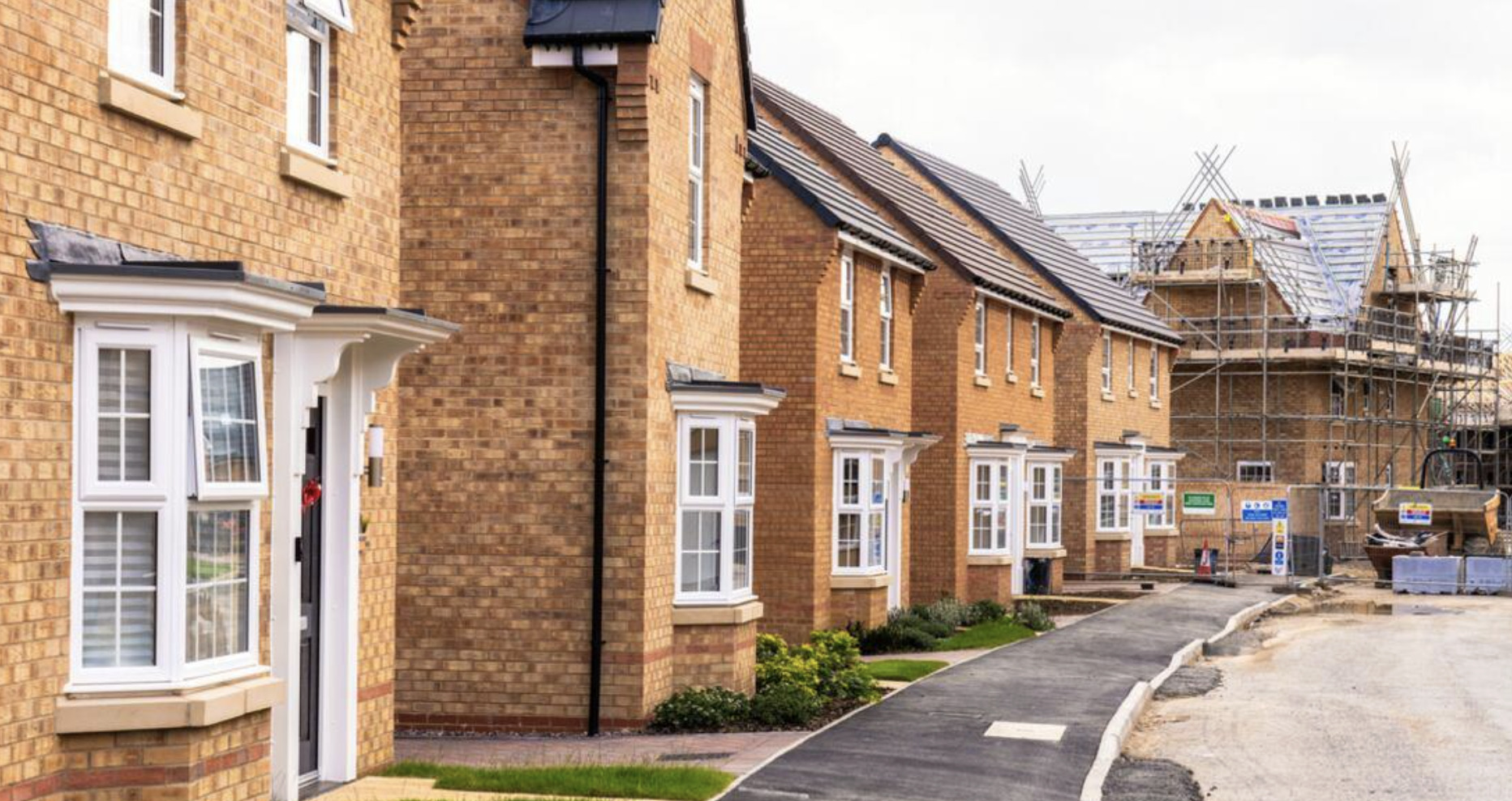
What Is Happening to Rents While This Is Going On
For the significant portion of the population that is renting rather than buying, the picture is at least as difficult. Rental inflation has not tracked mortgage rate movements in any meaningful way. Average rents in Dublin were running above €2,200 per month for a one-bedroom apartment in early 2026. Outside Dublin, average rents in cities like Cork and Galway have converged toward Dublin levels for smaller properties in central locations.
Renting at these levels while trying to save a deposit is mathematically punishing. The person paying €2,200 per month in rent on a take-home income of €2,900 has €700 per month left for all other expenses before any saving is possible. The time horizon for accumulating a meaningful deposit under those conditions is measured in a decade or more, not in years.
This is why the housing question is not simply a question about house prices or mortgage rates. It is a question about the structure of an economy that has concentrated its gains in a way that has made the basic act of establishing stable housing inaccessible for a large fraction of working adults. The Irish economy, by most macroeconomic measures, is performing strongly. Its labour market is near full employment. Its corporate tax base is the envy of comparable nations. The proposition that this strong economy has produced a housing market in which median earners cannot access median properties is not a contradiction — it is a description of where the gains have gone.
What Actually Changes in the Next Twelve Months
The most honest forecast for the Irish housing market in 2026 is that prices will continue rising, but more slowly than in 2025. Bank of Ireland has projected growth of approximately 3.5%. More optimistic projections from other analysts run to 5-6%. The case for moderation is that affordability constraints are beginning to limit the pool of buyers who can stretch further at current prices. The case for continued growth is that supply will remain insufficient and that demand, supported by strong employment and immigration, will continue to press against a limited stock.
For anyone trying to buy in this environment, the most useful framework is not about timing the market — which is impossible — but about understanding the specific constraints that apply to your circumstances and working through them systematically. The maximum borrowing capacity under income multiple rules, the available deposit, the schemes that apply to the specific type of property being considered, the tax implications of purchasing before year-end — these are the variables that actually matter for an individual decision, and they require advice that is specific to individual circumstances rather than general commentary.
The housing market is the defining domestic policy challenge in Ireland. It will not be solved in 2026. The trajectory is moving in the right direction on some metrics and in the wrong direction on others. For the person updating their savings spreadsheet every month, the honest answer is that the situation is difficult, that it is not improving as fast as the policy announcements suggest, and that the best available strategy is to understand the rules of the current system as precisely as possible and work within them.