
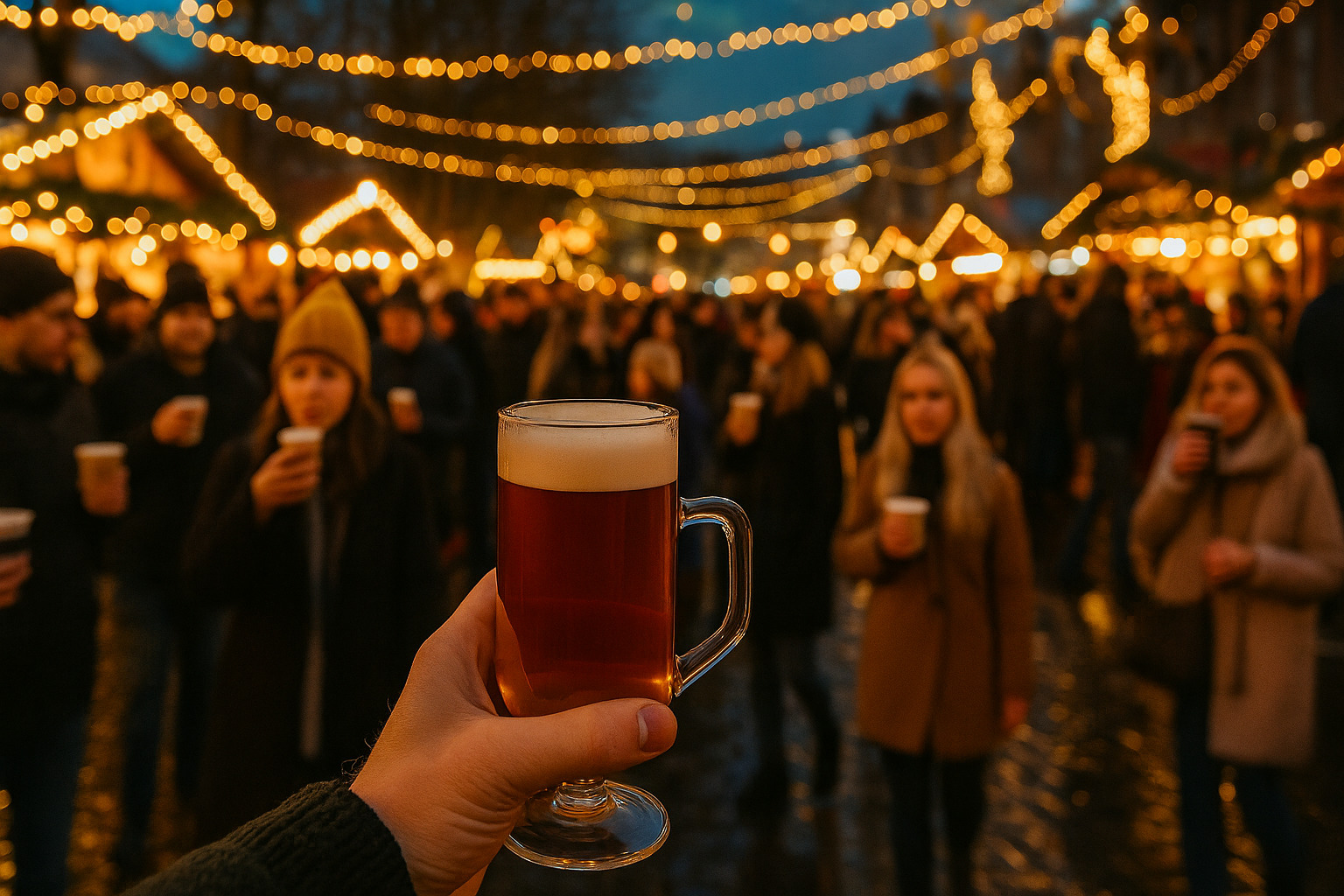
For a local, this drink isn’t considered special at all; it feels more like part of the national winter code. But for anyone observing the culture from within, Hot Whiskey reveals something essential about Ireland. It is warm, simple, slightly medicinal, slightly comforting — and inside it you feel everything: the climate, the habits, the ancestral memory.
The way it’s prepared in pubs — not by recipe, but by character
If you have ever sat in an old Irish pub in early winter, you know this scene: the bartender isn’t just mixing ingredients, he’s recreating a familiar mood. He heats the glass first, letting it absorb warmth like a hand held over a fire. This isn’t a technical gesture but a cultural one — the belief that a warm glass keeps the drink honest and the person drinking it protected from the cold. Honey comes next, melting into long amber streaks on the warm walls of the glass. The lemon isn’t just dropped in; it’s dressed with cloves, like small aromatic stars meant to mark the season. The whiskey goes in slowly, as if given a moment of respect. When the boiling water is poured, a fragrant cloud rises — lemon, honey, cold streets, and a hint of wood smoke all blending in the air. Irish pubs in winter smell exactly like this drink. And when someone wraps their palms around the glass for the first sip, it feels like stepping into shelter — not just from rain, but from the weight of the season itself.
Why the drink matters so deeply in winter
Living in Ireland teaches you quickly that Hot Whiskey isn’t really about the whiskey at all. It’s a small ritual of endurance, a way of leaning into the cold instead of pretending it isn’t there. It has long been stitched into the way Irish people mind one another. It appears when someone comes home drenched, when a voice is frayed by the Atlantic wind, when a room needs warming or a conversation needs softening. It’s the country’s quiet remedy for the dim season. December sharpens that feeling. Streets empty earlier, pub windows glow like small harbours, and conversations slow into something more deliberate. Holding a Hot Whiskey becomes a kind of gentle surrender — an admission that winter has settled in, and the only sensible thing to do is to meet it calmly rather than resist. Order one in a Dublin pub and the mood shifts by a fraction. It’s a little signal to everyone nearby: the night has begun; sit, breathe, settle.
How the recipe changes from county to county — shaped by history, climate and old habits
Traveling around Ireland, you begin to notice that even a simple drink carries traces of the past. In Cork, the drink is sweeter. This tradition goes back to the 19th century, when the port was one of the busiest in Europe, receiving shipments of sugar and citrus fruits. Families who lived near the docks added a little more honey or even syrup, giving their version a silky softness — the taste of a port city warming itself after long maritime winds. In Galway, the wind shapes everything, even drinks. A thin slice of ginger often appears in Hot Whiskey here. This habit traces back to medieval trade with Spanish ships: spices arrived occasionally, and locals learned that a touch of heat helped drive away the Atlantic chill quicker than anything else. A Galway Hot Whiskey wakes you as much as it warms you. In Northern Ireland, especially Belfast, the drink often carries the brightness of orange zest. This is a memory of the city’s industrial era, when small winter luxuries like oranges were treasured. Workers on shipyards and textile mills slipped a bit of zest into the drink as a reminder that even in long dark months, life could taste bright. In Kerry, the drink remains the most grounded and unadorned. Minimal ingredients, maximum sincerity. Kerry has always been a county of fishermen, farmers, and storytellers; traditions survive here because they are lived, not preserved. A Hot Whiskey in Kerry tastes like its landscape — straightforward, windswept, deeply comforting. Each version tells a story of geography, history, and character. In a way, Hot Whiskey is a map of Ireland in a glass.
Why this drink becomes a mirror of the Irish temperament
Spend enough winters in Ireland, and you’ll see why Hot Whiskey is more than a seasonal beverage. It carries the country’s temperament: quiet resilience, understated warmth, the instinct to take things slowly instead of rushing through discomfort. This drink doesn’t try to impress. It doesn’t try to dazzle. It simply performs its small miracle — it brings a person back into balance. The Irish have a talent for turning simple things into rituals: bread, music, conversation, and, of course, Hot Whiskey. And perhaps the most important truth about it is this: Hot Whiskey makes sense only when you live through an Irish winter yourself — when you feel the sudden darkness at 4 p.m., when rain becomes your daily companion, when you duck into a pub “just for five minutes” and end up staying for two hours. You hold the glass, and in that moment you understand the country better than through any book or guide.
It’s not just warmth you feel — it’s belonging.