
“The Tiger,” Archetypes, and La Familia
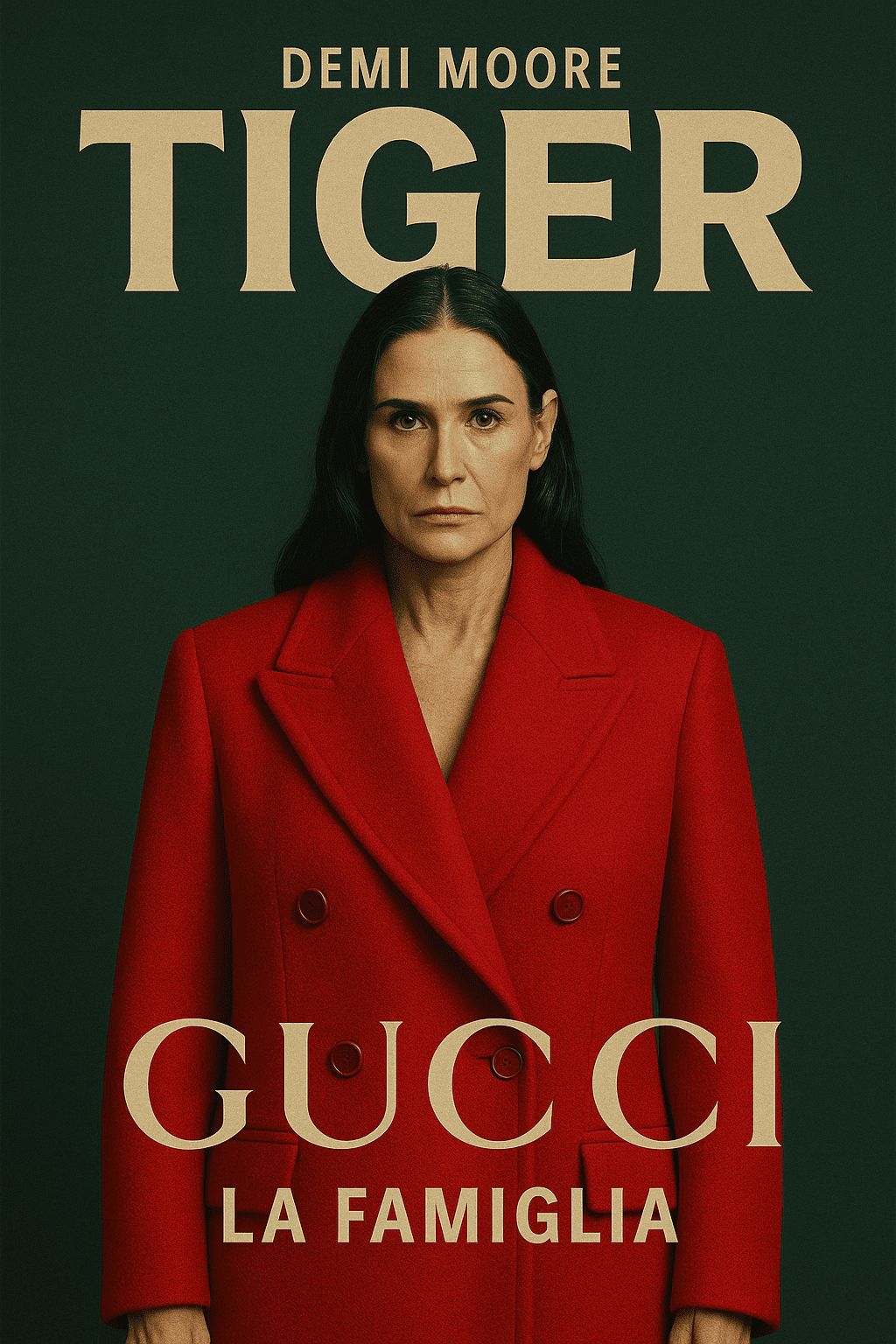
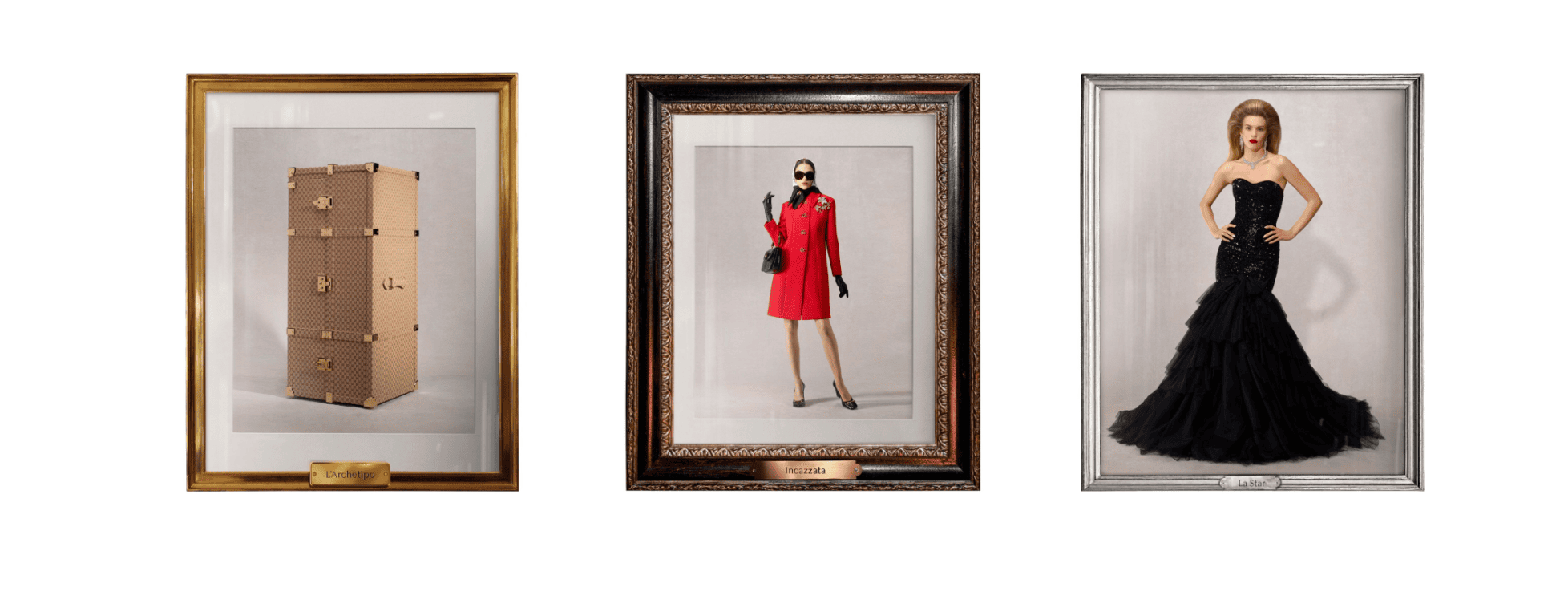
The The Tiger campaign became a manifesto of the new aesthetic. On the poster — Demi Moore, surrounded by the idea of La Familia. It’s more than just advertising: it’s a map of identities. Thirty-seven archetypes — from the snob to the nerd, from the androgynous to the bombshell — each one representing a facet of personality, each one a story of Gucci.
The key symbol of the collection is a bright red coat. For Demna, it’s a reference to his childhood and his first love for fashion. In this gesture we can already see the direction: bridging the personal with the universal, past with future, minimalism with maximalism.
Surprise as Strategy
Demna’s genius lies in context. At Balenciaga he turned fashion shows into performances. At Gucci, he uses surprise as a weapon. The early drop of the lookbook and the release of The Tiger are not random moves but calculated marketing strategies.
In an age of fragmented attention, the surest way to win it back is through shock and delight. Demna made Gucci not just a brand again, but a headline.
How Gucci Speaks of Itself
In the official release, Gucci emphasized: “This collection is an exploration of identity. Gucci has always been a home for many voices, and today we offer a language in which everyone can recognize themselves. La Familia is not just fashion, but a reflection of society.”
Here the brand itself shifts the focus away from clothes as objects, and toward belonging, diversity, and collective storytelling.
Critical and Media Reactions
The fashion press amplified the message. Vogue wrote that Demna “restored the element of surprise Gucci had been missing after the Michele era.” i-D called The Tiger campaign “a new language for discussing fashion and identity.”
Business of Fashion highlighted the strategy: “Demna uses shock and surprise as tools of crisis management. Gucci is once again at the center of conversation — and that was the mission.”
Even skeptics gave credit. The Guardian described the debut as “a blend of personal confession and brand therapy, where the red coat becomes a symbol not only for the designer, but for Gucci’s new chapter as a whole.”
Ethics as the New Currency
This brings us to the central question: can ethics become fashion’s new currency? Today’s customers expect more than beauty and status. They look for respect for culture, honesty, and consciousness.
Gucci addresses this through symbols:
- La Familia speaks of unity rather than exclusivity.
- The archetypes celebrate diversity.
- The Tiger transforms strength and vulnerability into an aesthetic statement.
Here, ethics are not morality in a strict sense, but an aesthetic code — a form of capital that shapes trust and loyalty.
Gucci’s Future: From Crisis to Reinvention
Working with a century-old legacy is like entering Disneyland. Symbols, codes, history — it’s a playground for creativity. Demna shows that a crisis can become a resource.
His Gucci balances minimalism and maximalism, personal and global, shock and meaning. The coming seasons are unlikely to bring just collections; expect films, performances, and cultural collaborations that redefine the brand’s presence.
Conclusion
Demna’s Gucci is more than fashion. It’s a cultural commentary, a marketing experiment, and an attempt to reset values. If money and status are no longer enough to make a brand great, then ethics — the ability to speak sincerely and boldly — may well be the new currency of fashion.