
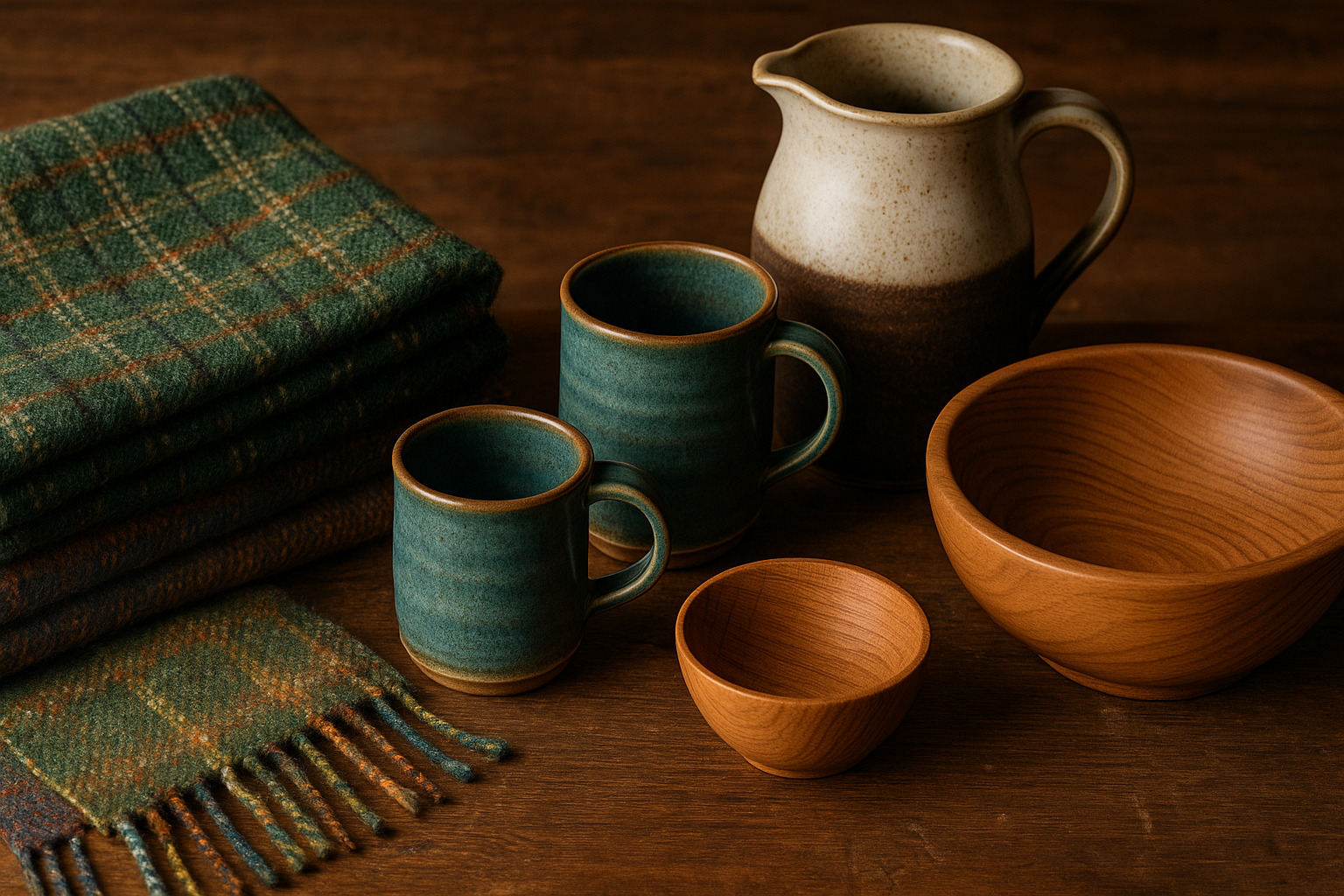
This is the New Celtic Craft Revival — a movement driven by economics, identity, digital storytelling, and a quiet national longing for authenticity.
The Emotional Pull of Authenticity
The past decade brought Ireland into the same global whirlwind of fast consumption and digital overstimulation that swept through nearly every developed country. People bought quickly, discarded quickly, and lived surrounded by objects that held little meaning. But fatigue eventually caught up. Consumers grew tired of short-lived products and the feeling of living inside a cycle of noise.
Irish culture, with its instinct for simplicity, responded in a way only Ireland could: by turning back to what feels real. Handmade craft is not just an object; it is a counterweight to a world that moves too fast. People crave items with texture, story, personality — things shaped by hands, not templates. The revival is not a trend; it is an emotional reset. It is the desire to touch something that carries time inside it.
Donegal Tweed: A National Symbol Reborn
One of the clearest symbols of this renaissance is Donegal tweed. For generations, it was woven in cottages and mills along the wild, wind-beaten northwest coast. Flecks of colour in the yarn mirrored the Donegal landscape — moss green, heather purple, sea blue, turf brown.
Today, Donegal tweed is no longer a nostalgic relic. It is a global fashion statement. Mill tours are booked months in advance. Young designers use tweed in modern silhouettes and capsule collections. International visitors treat a piece of Donegal fabric the way one might treat a piece of local art.
The magic of the revival lies in the contrast: a fabric woven with methods that barely changed in centuries now thrives in a modern marketplace driven by digital trends. But unlike mass-produced goods, Donegal tweed asks for attention. It demands touch. It rewards care. And that slow, immersive relationship is exactly what modern consumers seek.
Kerry Ceramics: The Return of the Handmade Home
Across the Atlantic-facing counties, potters and ceramic artists experience a wave of demand they describe as “unexpectedly overwhelming.” Studios in Dingle, Kenmare, and West Cork report waiting lists for everyday items — mugs, bowls, vases, planters — objects that used to be considered niche luxuries.
Why pottery?
Because people want homes that feel human. Irish ceramic work has a unique aesthetic: raw textures, coastal tones, shapes inspired by cliffs and coves, glazes that echo the Atlantic light. Each piece feels like a small landscape. In a world where identical products flood online marketplaces, a ceramic bowl made by a Kerry artist carries something irreplaceable — the imprint of a living person. Even imperfections become treasured details. The revival here is not about decoration; it is about emotional grounding.
A Digital Paradox: Technology Reviving Tradition
One of the most surprising forces behind the craft revival is the digital ecosystem itself.
Social media — the same medium that once accelerated mass consumerism — now amplifies the allure of handmade goods.
Irish artisans share the making process online:
spinning, weaving, glazing, carving, dyeing, sanding, knitting.
People watch not just the final product but the becoming of the object. Viewers feel a connection to the maker long before they buy anything.
This paradox is central to the renaissance.
Technology, which once competed with tradition, now helps preserve it.
Young consumers discover crafts through TikTok reels of hands weaving on a loom. Urban professionals scroll through Instagram stories of rural potters firing morning batches. Diaspora Irish living abroad order handmade goods as a way to reconnect with home.
Craft becomes not just an artefact, but a story people willingly follow.
The Economy of Meaning
Another force feeding the revival is the shift toward considered spending. Irish consumers increasingly choose fewer things but choose them better. When a purchase is meant to last, handmade becomes the natural choice.
Small workshops across Ireland report a new kind of customer — one who asks about sourcing, materials, technique, and the biography of the craftsperson. This behaviour blurs the line between commerce and culture. Buying craft becomes a vote for values: locality, sustainability, human skill, patience.
The revival has economic consequences too. Rural regions benefit from increased tourism to craft studios. Artisan markets expand. Apprenticeships, once fading, begin to return. Children in small towns grow up seeing creative careers as viable, not risky. The cultural and financial ecosystem strengthens at the same time.
Identity, Memory, and the Celtic Thread
At the heart of this renaissance lies something deeper than aesthetics or economics — identity.
Irish craft tradition carries centuries of memory: fishermen knitting Aran patterns that encoded family identity, weavers spinning cloth for harsh coastal winters, potters shaping clay that came from local soil.
In a rapidly changing world, these traditions offer a sense of continuity. They are reminders that Ireland’s story is not only written in books or songs but also in objects touched by human hands.
For many people, owning a handmade Irish object feels like participating in a cultural lineage. It is a gentle act of preservation. A way of saying: this matters.
A Revival That Feels Like Home
The New Celtic Craft Revival is not loud. It is not marketed as a movement. It rises the way things often rise in Ireland — quietly, steadily, with a sincerity that makes it impossible to ignore.
Irish handwork is experiencing its most vibrant moment in decades because people are returning to what feels true: crafts made slowly, thoughtfully, with a sense of place. Objects that carry the land and the maker inside them. Patterns that belong to the island’s history but speak effortlessly to its future.
Ireland is discovering that in an era of noise, the handmade feels like home.