
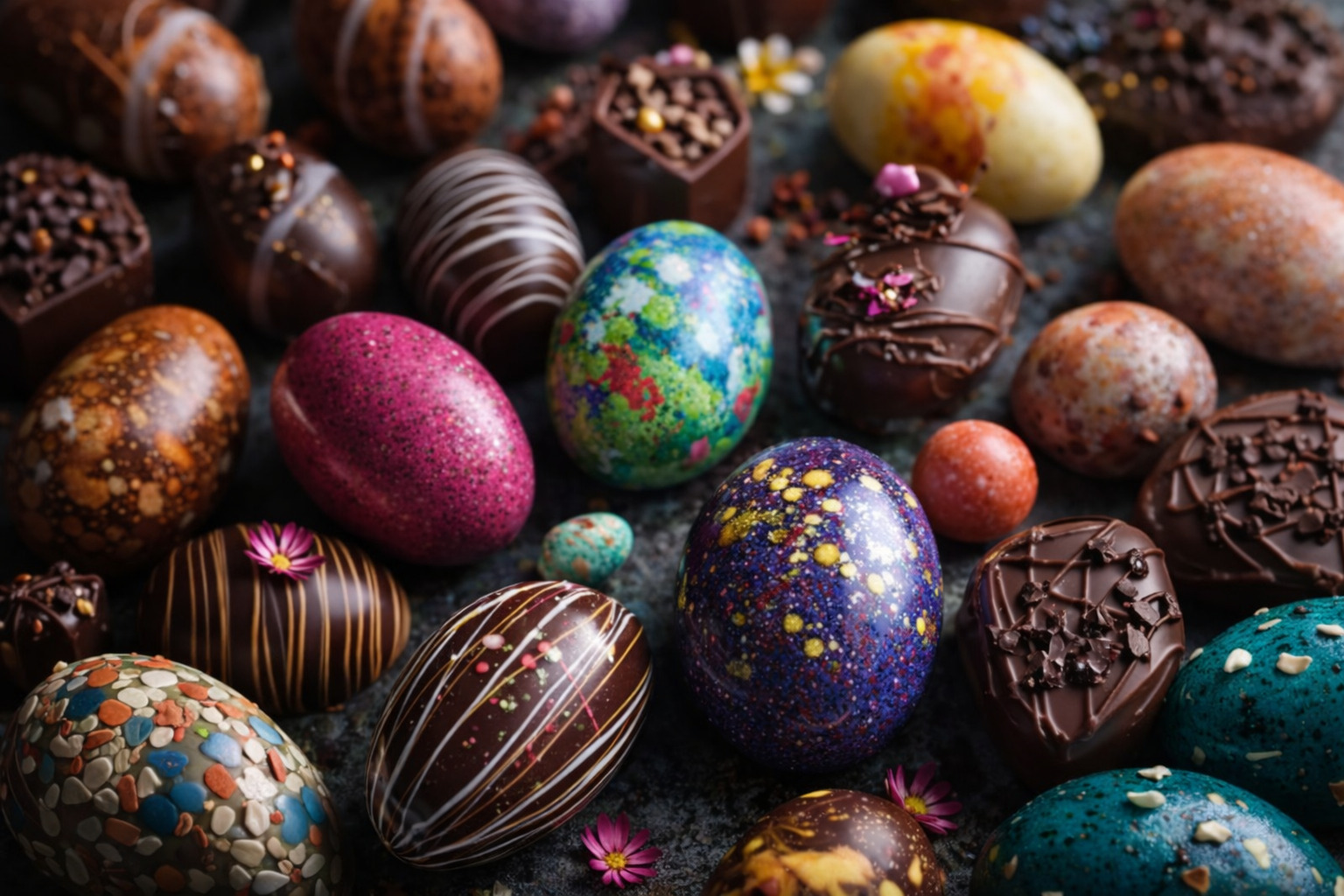
At its simplest, Easter chocolate refers to the tradition of gifting and sharing chocolate during Easter, most commonly in the form of eggs, bunnies, and seasonal treats. The egg itself is symbolic, representing renewal and new life, which is why it became central to the celebration. Over time, chocolate replaced real eggs as a more indulgent and widely accessible version of this tradition. What began as a simple seasonal gesture has gradually evolved into a category of its own, shaped by both tradition and innovation.
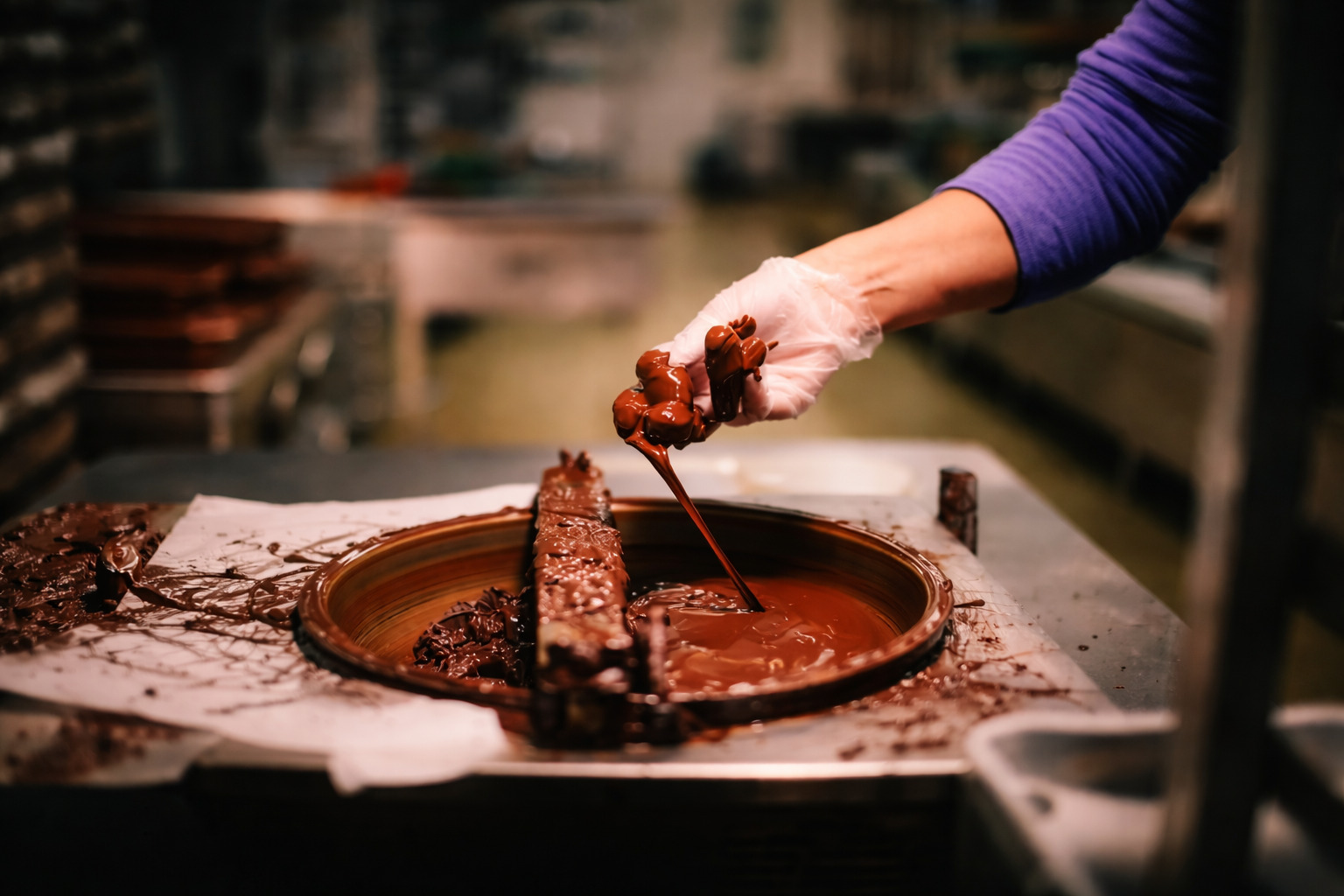
Today, however, Easter chocolate is no longer defined by its shape alone. What was once a mass-produced, decorative sweet has become a space for craftsmanship, flavor experimentation, and design. From filled eggs with layered textures to hand-finished surfaces and locally sourced ingredients, modern Easter chocolate reflects a shift in how people experience food. It is no longer just something to eat, but something to explore, gift, and remember.
Across Europe, and particularly in markets like Ireland, chocolate is undergoing the same transformation that reshaped coffee and wine over the past decade. The shift is not driven by novelty alone, but by a deeper recalibration of how people assign value. Taste is no longer enough. The questions have changed. Where was it made? Who made it? What does it represent?
This is where the rise of bean-to-bar production becomes significant. It is not just a technical approach but a philosophical one. By controlling the process from cacao bean to finished product, producers are redefining chocolate as something closer to a crafted ingredient than a mass commodity. The result is a different kind of product entirely—one that carries nuance, variation, and a sense of place. What used to be standardized is now expressive.
Easter has become the perfect stage for this evolution. It functions almost like a seasonal showcase, where chocolatiers present their most ambitious work. Not because the holiday demands excess, but because it offers a rare moment when consumers are open to discovery. The traditional hollow egg is being replaced by layered constructions filled with pistachio creams, salted caramel, honey-based pralines, and textures that move between soft, crisp, and fluid within a single bite. These are not decorative upgrades. They are structural rethinks of what chocolate can be.
At the same time, the visual language of chocolate has changed. Presentation is no longer secondary. Hand-painted shells, sculptural forms, and packaging that feels closer to design than retail have become part of the product itself. This is not about making chocolate “look good” for the sake of it. It reflects a broader shift toward experience-driven consumption, where what you see, share, and remember is as important as what you taste.
There is also a growing emphasis on locality, which introduces another layer of meaning. Ingredients like regional honey, sea salt, or dairy are not added as marketing details but as defining components of flavor. This creates a sense of terroir that was once reserved for wine. Chocolate, in this context, becomes geographically specific. It stops being universal and starts becoming identifiable.
What makes this shift particularly relevant now is how closely it aligns with wider consumer behavior. People are buying less, but with more intention. They are moving away from volume and toward selection. Seasonal products, especially those tied to gifting moments like Easter, have become a space where this mindset is most visible. Premium chocolate is growing not because it is more indulgent, but because it offers clarity—about origin, about process, and about value.
In that sense, chocolate is no longer competing on sweetness or price. It is competing on meaning. The difference between a standard Easter egg and an artisan one is not just in ingredients, but in what the product communicates. One is familiar and functional. The other is expressive.
This is why Easter 2026 feels different. Not because traditions have disappeared, but because they are being reinterpreted. Chocolate has moved beyond being a seasonal treat. It has become a medium—one that reflects taste, identity, and a more conscious approach to consumption.
And that shift is unlikely to reverse.