
For a long time, strength meant surviving pressure. Being useful. Being capable. Being the one who “handles things.” Men were rewarded for resilience, even when resilience was nothing more than refined self-neglect. But endurance, when stripped of romance, is just exhaustion with better branding.
So a new kind of masculinity begins to take shape—quiet, intentional, stripped of theatrics. Not soft, not passive, not escapist. Mature. A man chooses this not because he is tired, but because he finally understands the price of living permanently on high alert. He chooses it because silence has become more valuable than applause, and time more valuable than dominance.
He no longer wants to live in performance mode. The old gestures—loud ambition, constant hustle, the ability to “carry everything”—lose their appeal. They delivered admiration but stole bandwidth. From the outside he still looks confident, but inside the focus shifts. Not on impression, but on quality. Not on speed, but on clarity. Not on accumulation, but on meaning.
He discovers a new language of comfort—one that’s subtle, nearly austere. His home becomes a recovery space, not a showroom. A room where light is gentle, the air is uncluttered, and every object earns its place gives him more power than any flashy interior. He stops collecting things to validate himself. Instead, he chooses what grounds him: a wool throw with weight, a chair that supports him, a room that doesn’t speak louder than his thoughts.
Travel evolves as well. It’s no longer a race to “see everything.” It’s the wish to feel something genuinely. One quiet espresso on a slow street can deliver more clarity than a whirlwind itinerary. One evening with the right people can restore him more quickly than months of habitual socializing. He stops chasing distance and starts pursuing depth.
Self-care becomes disciplined, not decorative. He eats for stability, not entertainment. He sleeps not because he’s collapsing, but because he finally understands sleep is infrastructure, not indulgence. He stops tolerating what drains him. He stops lending himself to obligations that never repay. And for the first time in years, his energy stretches beyond survival—it reaches the parts of his life he neglected for too long.
He stops hiding his internal tension. Silence is no longer his armor. He realizes that acknowledging what’s difficult is not weakness—it’s a new category of responsibility. He speaks when he needs to speak, and withdraws when the world grows loud. Mental health stops being a vague idea. It becomes a tool, as essential as discipline or ambition.
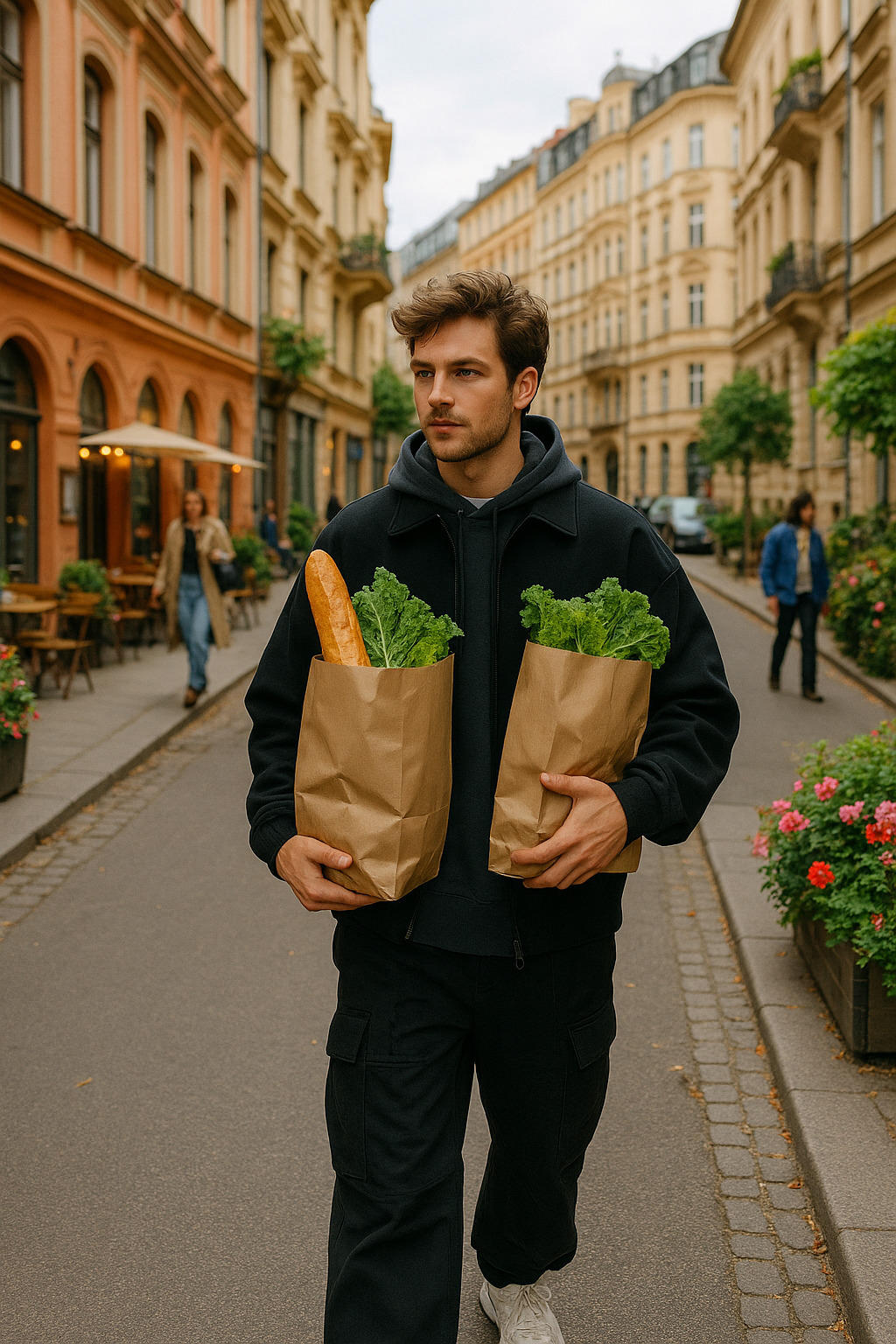
Even his style shifts. Logos and declarations lose their charm. He chooses texture over branding, substance over spectacle, calm over performance. Clothes exist not to impress others but to support his pace, his mood, his body. His wardrobe becomes clean, precise, almost architectural—an outward extension of an internal state he finally knows how to maintain.
None of this makes him softer. It makes him sharper. It makes him more dangerous in the right ways and less destructive in the wrong ones. He stops confusing chaos with drive. He stops mistaking exhaustion for virtue. He stops living as if survival were the only thing he was built for.
This new maturity isn’t about retreating from ambition. It’s about refusing to dilute it. It’s about aiming with intention instead of swinging blindly. It’s about protecting the parts of himself that create meaning, not feeding the parts that generate noise.
A man who lives this way doesn’t shout. He doesn’t chase. He doesn’t perform masculinity—he inhabits it.
The male version of Soft Living isn’t softness.
It’s ownership.
It’s clarity.
It’s the most underrated form of strength in a world obsessed with volume.
And for the first time, a man isn’t living against himself. He’s living with himself. Fully.