
For much of the post–Cold War period, power operated within a framework of visible limits. Military strength existed, but it was constrained by alliances. Economic dominance mattered, but it was filtered through rules. Influence was exercised indirectly, through institutions designed to slow decisions, diffuse responsibility, and absorb conflict. Restraint was not merely a moral preference; it was an operating principle. That architecture is now eroding.
The defining feature of the current moment is not aggression, but confidence without constraint. States no longer behave as if legitimacy must precede action. Capacity has become sufficient. Where previous generations of leaders invested heavily in narrative, alignment, and procedural cover, today’s power increasingly moves first and explains later — if at all. The language of obligation is giving way to the language of leverage.
This is how spheres of influence return — not through treaties or declarations, but through behaviour. They are no longer announced. They are enacted. Control is established through presence, pressure, and persistence rather than recognition. Borders remain formally intact, but decision-making space narrows. What matters is not sovereignty on paper, but freedom of action in practice.
Alliances, long assumed to be the backbone of global stability, are undergoing a similar transformation. They have not collapsed, but they have thinned. Commitments that once carried automatic weight are now conditional, interpreted through domestic priorities and shifting calculations of interest. Solidarity has become selective. Support is offered where convenient, withheld where costly. Alliances increasingly function as preferences rather than guarantees.
This change does not require dramatic exits or public ruptures. It advances quietly, through ambiguity. A partner hesitates. A response is delayed. A commitment is reinterpreted. Over time, uncertainty accumulates. What once served as deterrence begins to look like optionality. The result is not chaos, but asymmetry — a system in which some actors act freely while others wait for signals that never arrive.
Europe occupies a particularly exposed position within this emerging order. For decades, its influence rested on a different model of power: regulatory depth, economic scale, and institutional continuity. Europe shaped outcomes by setting standards rather than issuing commands. Its authority travelled through rules that others adopted because they worked, not because they were imposed. This approach proved remarkably effective in a world that valued predictability and process.
But that world is receding. Influence that remains embedded in procedure struggles in an environment that rewards speed, clarity, and visible intent. Europe still possesses capacity — economic, legal, technological — but its traditional reluctance to signal power openly has become a vulnerability. Where restraint once conveyed confidence, it is now read as hesitation. Where silence once suggested stability, it increasingly suggests absence.
This does not mean Europe is weak. It means it is misaligned with the prevailing tempo of power. Systems designed to function through accumulation are colliding with a political environment that operates on compression. Decisions that arrive late, however well-considered, no longer define the field. They react to it. Over time, this erodes initiative, even when underlying strength remains intact.
The United States illustrates a parallel shift from a different angle. Long the primary architect and guarantor of the post-war order, it now treats many of its own creations as negotiable. Commitments are weighed transactionally. Institutions are engaged instrumentally. The assumption that leadership requires stewardship has weakened. Power is exercised more directly, with fewer intermediaries, and less patience for friction.
China, by contrast, never fully internalised the logic of restraint. Its approach has long prioritised visibility, continuity, and physical presence. Influence is signalled early and reinforced over time. Infrastructure, investment, and proximity do much of the work that rhetoric once performed. In this model, clarity is not escalation; it is insurance.
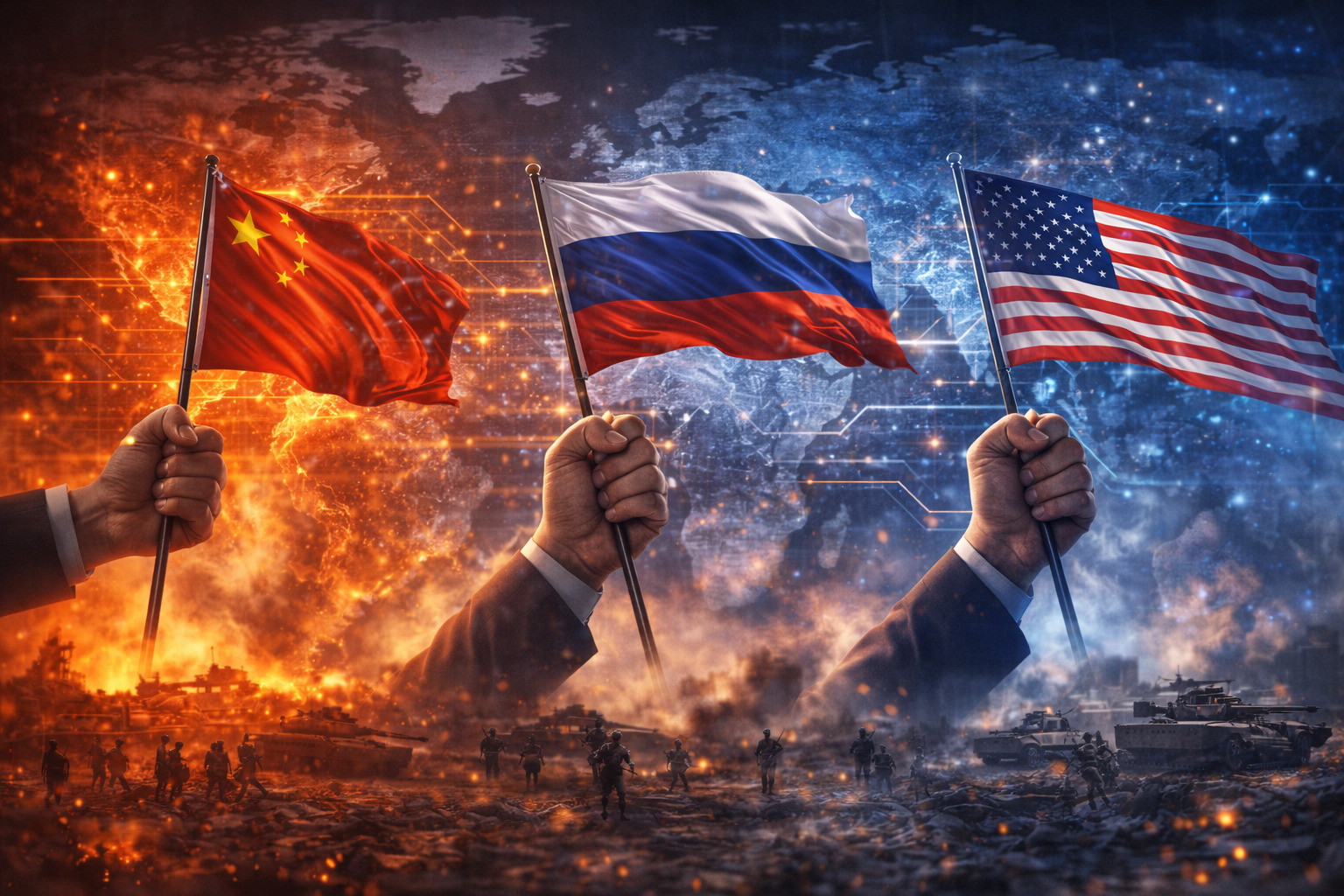
Between these approaches, a gap has opened — and it is widening. The gap is not ideological, but operational. It separates those who assume power must justify itself from those who assume justification follows success. As that gap grows, the costs of hesitation increase. The system begins to favour actors willing to accept risk over those committed to process.
It is tempting to frame this moment as a prelude to conflict. That framing is misleading. The greater danger lies not in universal escalation, but in selective domination. Power concentrates where resistance is weakest, not where confrontation is loudest. Pressure is applied incrementally, often below the threshold that would trigger collective response. Over time, the absence of reaction becomes a form of consent.
What is breaking down, then, is not peace, but predictability. The rules have not vanished, but their enforcement has become uneven. The expectation that power must explain itself has faded. In its place emerges a more fragmented order, shaped less by shared norms than by relative capacity.
This shift does not announce itself as a crisis. It presents itself as pragmatism. As realism. As adaptation. And that is precisely why it is difficult to confront. There is no single event to respond to, no clear violation to reverse. The change unfolds through accumulation — of exceptions, delays, and silences.
The return of unchecked power does not require ambition without limits. It requires limits without guardians. The most significant rupture of the current era is not that power is being abused, but that fewer actors are expected to restrain it — or to explain why they should.
In such a system, stability becomes conditional. Not on strength alone, but on visibility. Power that refuses to signal risks being ignored. Power that signals too aggressively risks fragmentation. Navigating between these pressures is now the central challenge of global politics.
The world has not entered a new age of disorder. It has entered an older one, rediscovered — where influence is exercised quietly, boundaries are tested incrementally, and restraint is no longer assumed. What follows will not be decided by those who speak the loudest, but by those who act first, and explain least.