
Previously, beneficiaries of Temporary Protection — granted under the EU’s Temporary Protection Directive 2001/55/EC and implemented in Ireland through national legislation — could rely on up to three months of free accommodation in state-run centres. This window allowed time to settle, gather documents, search for work, and navigate the Irish administrative system. With the limit now reduced to 30 days, the first month becomes an accelerated period of essential decision-making. After this deadline, individuals must secure a private rental or move to host accommodation under Ireland’s Accommodation Recognition Payment scheme (https://www.gov.ie/en/publication/39604-accommodation-recognition-payment/). Basic financial support (€38.80 per adult per week) remains available, although most broader social supports begin only after leaving state centres.
The tightening of support is driven by system pressure. Ireland is facing one of the most acute housing shortages in the European Union. Public housing is limited, private rentals are expensive, and rising migration has placed significant strain on the reception system. The Department of Housing has repeatedly acknowledged that available capacity is close to its limit. Justice Minister Jim O’Callaghan has described long-term free accommodation as “financially and logistically unsustainable,” a view echoed by social policy experts. Civil society groups, including the Immigrant Council of Ireland, warn that a 30-day window is often too short to secure stable housing, raising the risk of precarious or insecure living situations.
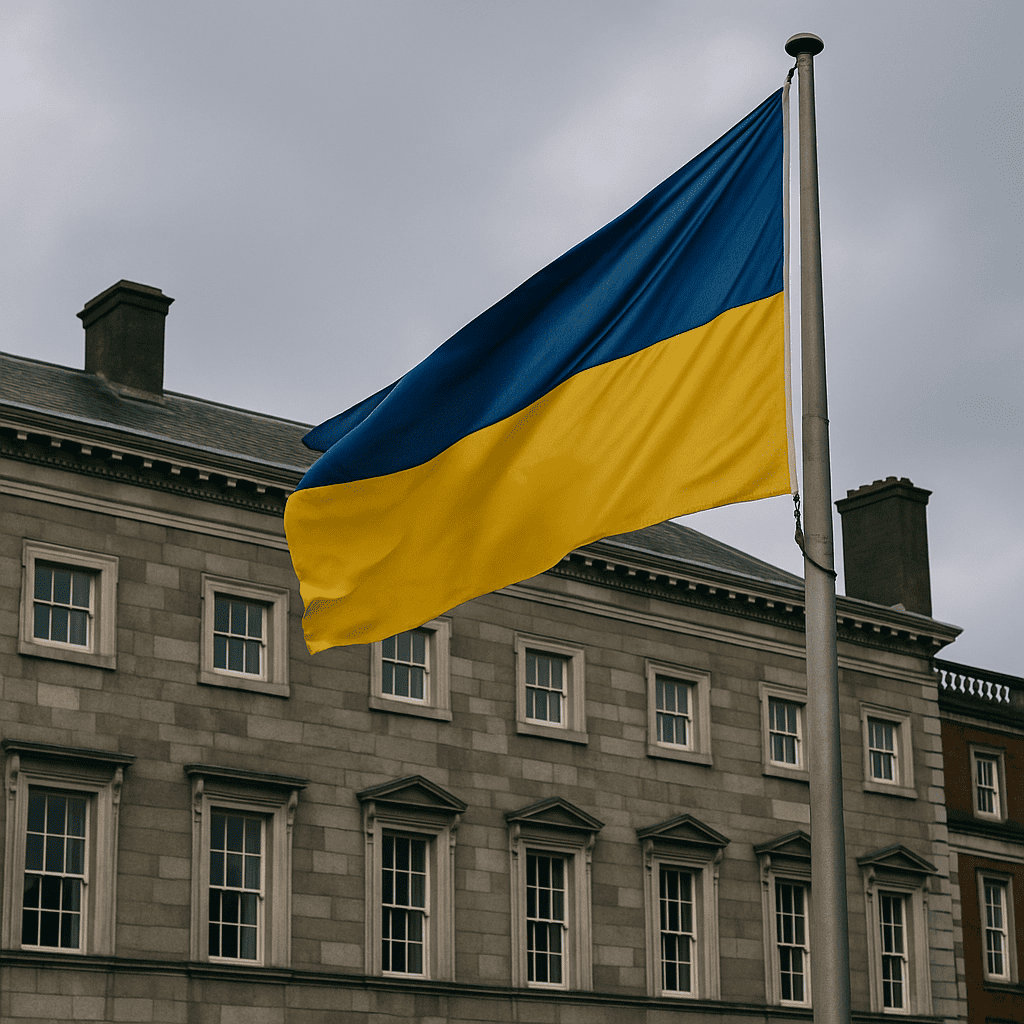
For Ukrainians and non-Ukrainian residents who lived in Ukraine before the war, the shortened accommodation period fundamentally changes the early adaptation process. Free state housing had been one of the few stabilising guarantees at the start of resettlement. Losing two-thirds of that time removes a buffer previously used to understand the system, secure services, access community support, and make informed long-term decisions. For those with additional documentation requirements, the compressed timeline can be even more challenging.
For people already living in Ireland under Temporary Protection, the reform does not change existing arrangements. It affects only newcomers arriving after November 2025. Yet for new arrivals, the state now expects a faster transition into self-sufficiency. Tasks that once stretched across three months — finding housing, enrolling children in school, registering for services, starting job searches — must now begin almost immediately. Free accommodation is no longer designed as a settlement period but as a short emergency measure.
Looking toward 2026, policy signals suggest that Ireland is preparing deeper structural reforms. The state may reconsider the duration of Temporary Protection again if arrival numbers remain high. Privately managed accommodation is expected to expand under stricter oversight, and housing-related supports may become increasingly conditional, linked to employment, training, or participation in English-language programmes. The government is also expected to place greater emphasis on rapid labour market entry, clearer categorisation of applicants, and stronger integration requirements. Although no formal policy documents have yet been published, a return to the more generous system of 2022–2024 appears unlikely.
For future arrivals, preparation is crucial. People should register for Temporary Protection immediately upon arrival, begin searching for accommodation within the first week, and plan for earlier financial independence. Families intending to stay long-term should explore private rentals early rather than relying solely on state accommodation. Updates on support measures are published regularly through the government’s Ukraine Support portal, and procedures may evolve quickly as Ireland adjusts its system to ongoing pressures.
Ireland continues to offer protection to those fleeing the war, but the era of long-term, open-ended state accommodation is ending. The reduction from 90 to 30 days reflects a structural change from emergency humanitarian response to sustainable system management. In 2026, the approach is likely to become more structured, more conditional, and more focused on integration. For Ukrainians and others seeking safety, understanding these changes — and preparing early — will be the key to stability, dignity, and long-term success in a country reshaping its migration framework for the future.