
The OECD average is approximately 11 per cent. The Nordic countries that the Irish childcare policy debate aspires to are in the 4 to 7 per cent range. The gap between where Ireland is and where Irish parents reasonably expect to be is one of the largest in the European Union, and the political conversation about closing it has, since 2021, been dominated by a particular set of reforms that have produced real but limited effects.
Budget 2026 included the latest tranche of those reforms. The Core Funding allocation was increased, the National Childcare Scheme subsidy ceiling was raised, and the universal hours of the Early Childhood Care and Education (ECCE) preschool programme were modestly extended. The headline numbers were presented as the largest investment in early years in the history of the State. The headline numbers were accurate. They are also, when examined against the structural shape of the problem, addressing the wrong question.
This long-read is about what Irish childcare actually costs in 2026, what the existing reforms are doing well, what they are not doing, and the harder problem that the next reform package will have to face.
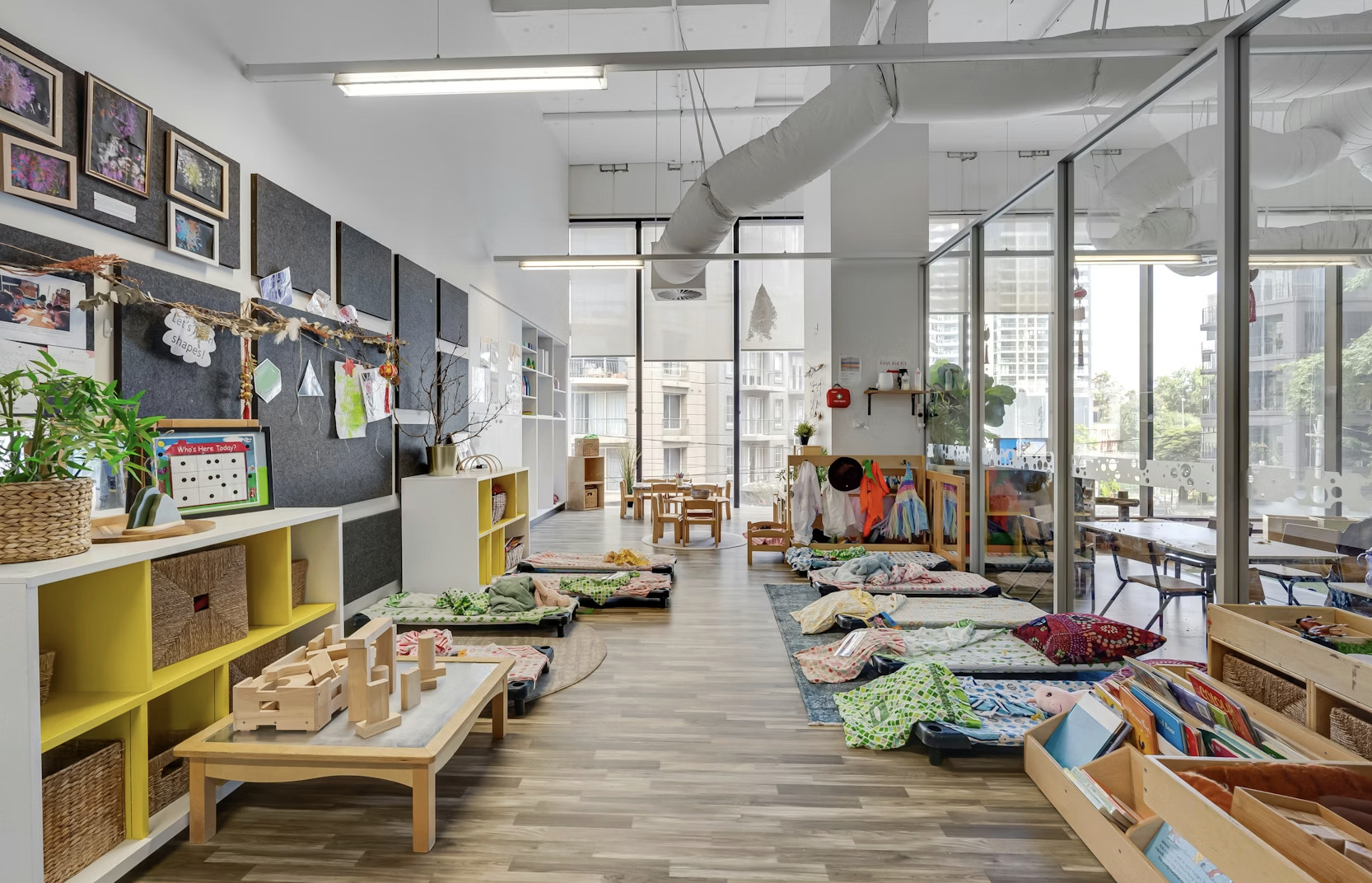
Where the money actually goes
A typical full-time childcare place for a child under three in a Dublin private operator in May 2026 costs between 1,300 and 1,700 euro per month before any subsidy. The National Childcare Scheme, which provides means-tested and universal subsidies, reduces this by between 80 and 350 euro per month for the median family, depending on income and household composition. The net cost to the parents is therefore typically between 950 and 1,500 euro per month. For a two-child household, the net cost can reach 3,000 euro per month, which exceeds the rent or mortgage payment for a significant share of working families.
The breakdown of that 1,300 to 1,700 euro headline cost is publicly available through Pobal's annual sector report. Roughly 70 per cent is staff costs. Roughly 15 per cent is rent or property cost. Roughly 8 per cent is food, materials and consumables. Roughly 5 per cent is regulatory and compliance overhead. The remaining 2 per cent is operating margin, which in the small-operator segment is, on average, indistinguishable from zero in any given year.
The staff cost share is the structural fact that the Irish childcare policy conversation has been built around. Childcare workers in Ireland are, in 2026, paid an average of approximately 14.50 euro per hour, with significant variation by qualification and seniority. This is above the minimum wage, but it is below the rate at which the sector can reliably retain qualified staff. The chronic recruitment crisis that has affected the sector for a decade is not a marketing problem. It is a pricing problem. The sector is not paying enough to compete with retail, healthcare and primary teaching for the same labour pool.
What Core Funding actually does
The Core Funding scheme, introduced in 2022 and incrementally expanded since, is the central policy instrument of the current reform package. The scheme provides direct operational funding to early-years providers in exchange for a fee freeze, participation in standardised reporting and adherence to specific quality standards.
The effect on the sector has been real. Fee inflation, which had been running at 5 to 8 per cent annually before 2022, has been held close to zero in nominal terms since the scheme came online. Several thousand small providers who would have closed under cost pressure have remained open. Staff retention has improved modestly in the segments of the sector where Core Funding combines with public-sector pay parity work.
The limits of the scheme are also real. The fee freeze, applied across a sector with rising operational costs, transfers the margin pressure from parents to operators. The smaller operators absorb the pressure by deferring maintenance, reducing investment in materials, and accepting lower margins. The larger operators absorb it by adjusting service mix, charging for ancillaries that used to be included, and consolidating sites. The cost is being held. The structural finances of the sector are not improving in a way that the Core Funding allocation, at its current level, can address.
The second limit is the supply side. Core Funding does not, by itself, create new childcare places. The number of available places in the under-three age category has grown by approximately 4 per cent since 2022, against demand growth that is several times higher. The waiting list for a place in a Dublin creche, by Pobal's most recent estimate, exceeds eight months in most parts of the city. The cost reductions are meaningful for parents who already have a place. They are irrelevant for parents who cannot get a place.
The third limit is the distributional question. The National Childcare Scheme subsidy structure produces a means-tested ramp that, by design, captures most of the savings for lower-income families. This is appropriate as a matter of fairness. It is also a structural reason that middle-income families experience the system as inadequate. A household with two earners on the median Irish wage is not poor enough to receive significant subsidy and not rich enough to absorb the unsubsidised cost without meaningful financial stress. The cohort is large, and the political consequences of failing to address it are accumulating.
What the policy debate is not engaging with
Three structural facts of the Irish childcare problem are present in the academic literature, present in the OECD reports, present in the international comparisons, and almost entirely absent from the public political conversation.
The first is that no high-quality childcare system in Europe is delivered primarily through private provision. The Nordic systems, the French system and the Belgian system are built around state or municipal provision as the dominant model, with private provision as a smaller complement. The reasons are structural. Childcare is a labour-intensive service with a price ceiling determined by what parents can pay rather than by what the service costs to deliver. The market does not clear at a price both sustainable for the operator and affordable for the parent without public provision either delivering the service directly or massively subsidising the delivery. The Irish model relies on the latter, partially, and the result is the cost structure parents currently experience.
The second is that the supply problem is not solvable through demand-side subsidy alone. Increasing the National Childcare Scheme allocation increases what parents can pay, which increases what operators can charge, which produces a partial cancellation of the policy effect. The literature on the United States child tax credit experiments documents this pattern carefully. Irish researchers, including teams at the ESRI and at TCD, have produced similar findings in the Irish context. The policy implication is that subsidy-led reforms have intrinsic limits that the Department of Children has not yet fully internalised.
The third is that the labour-side reform is the long-term solution, and it is the most politically difficult. Bringing childcare worker pay into structural parity with primary teacher pay would require either large-scale state subsidy of an essentially private workforce or the absorption of childcare provision into the state sector. Both options carry substantial fiscal and political costs. Neither has been seriously proposed by any of the major parties in their current form.
What the next reform package will need to look like
The reform pathway that the structural analysis points toward has four elements, only one of which the Government has so far engaged with at scale.
The first is direct state provision of childcare in areas with severe supply shortages. The pilot programmes that exist, including the small number of state-built early years centres in West Dublin and Limerick, have produced meaningful capacity at a cost that is competitive with the private alternative. Scaling these pilots to a national programme would require capital investment of a scale comparable to the school-building programme of the 1960s and 1970s. The Department has the institutional knowledge to do this. The political commitment has not yet been made.
The second is a pay scale for early-years professionals that is set in relation to primary teaching rather than to retail. The current pay floor is the result of negotiated agreements that have raised wages incrementally but have not bridged the structural gap. A serious pay reform would acknowledge that early-years professionals are doing educational work and should be compensated as such. The fiscal cost is substantial. The retention and quality benefits would be measurable within three to five years.
The third is expansion of the universal preschool component to cover children under three. The ECCE programme has produced one of the most successful early-years interventions in Irish policy history. Extending its universal coverage downward to one and two-year-olds would address the most acute cost segment of the current system. The administrative pathway exists. The funding decision has been deferred in successive Budgets.
The fourth is regulatory reform to reduce the compliance burden on small providers without compromising child safety. The current regulatory regime is, by Pobal's own assessment, more burdensome than the equivalent regimes in comparable European countries, and produces a disproportionate cost burden on smaller operators. A streamlined regime would not solve the structural cost problem, but it would meaningfully reduce one of its drivers.
What this means for Irish families now
For a family making decisions in May 2026 about childcare, the policy environment is unlikely to produce major changes in the cost structure over the next 18 to 24 months. The Core Funding scheme will continue to hold the fee line. The National Childcare Scheme subsidy will continue to expand at the margin. New supply will arrive slowly. The fundamental arithmetic of the system will, on the current policy trajectory, remain broadly similar to what it is today.
The longer-term picture is more uncertain. The political pressure on the system is rising, the labour market dynamics are forcing wage adjustment whether the system can absorb it or not, and the fiscal capacity of the State has improved over the past two years. The window for a more structural reform package is, plausibly, opening within the current Government's term.
Whether that window is used or deferred to the next government is now the most consequential question in Irish family policy. The cost of childcare in Ireland is not, on the current trajectory, going to fall to the European median within the lifetime of any child currently in the system. The trajectory can be changed. It will not be changed by another increment of the existing policies. The structural reform conversation needs to begin, and the next twelve months are the time to begin it.