
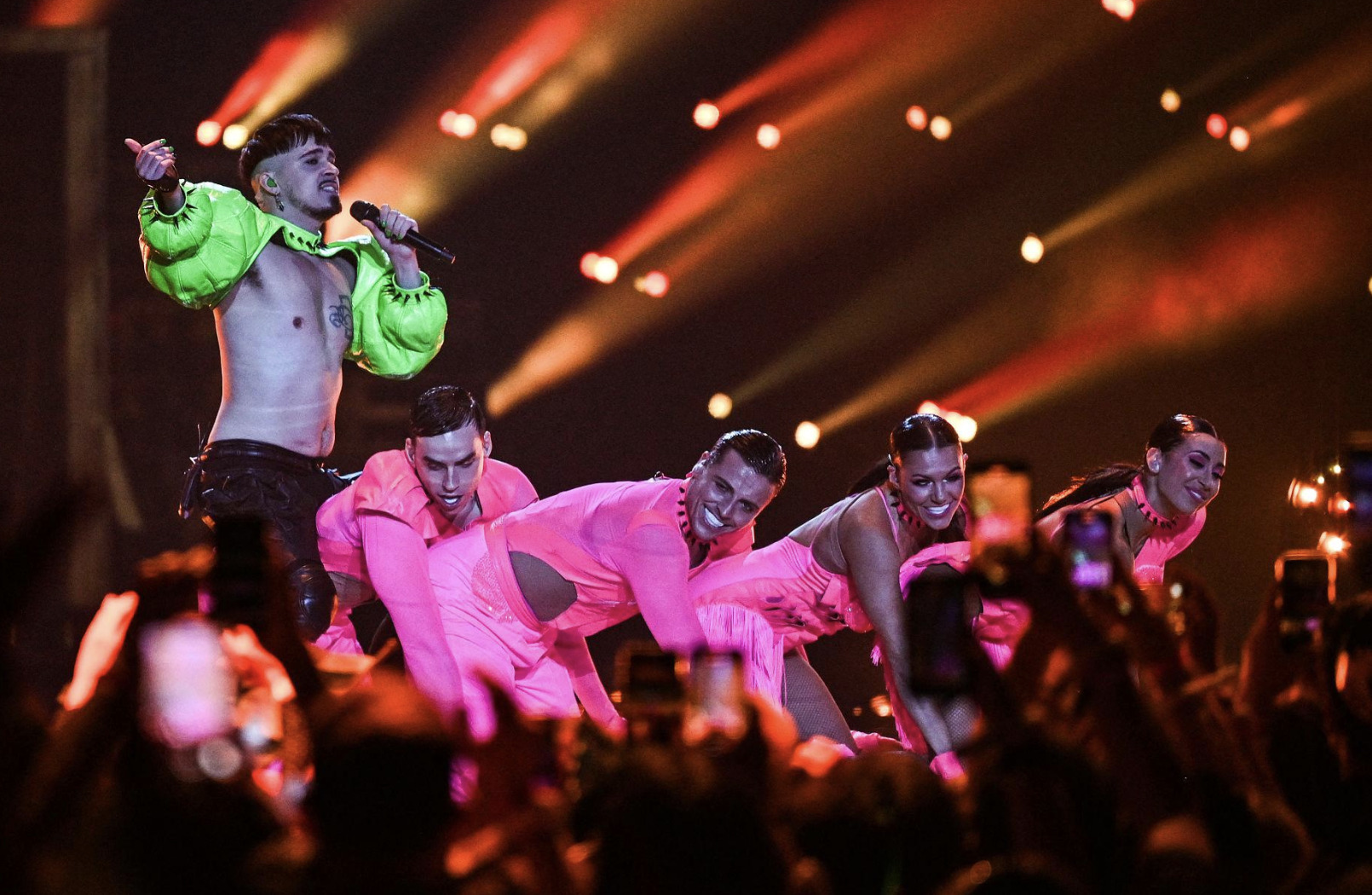
Ireland was not there to see it.
RTÉ announced in December 2025 that Ireland would not participate in or broadcast Eurovision 2026, following the EBU's decision not to exclude Israel despite the ongoing war in Gaza and allegations of coordinated Israeli government campaigns to influence the public vote in previous editions. Spain, the Netherlands, Slovenia and Iceland made the same call. The combined withdrawal of five countries — the largest boycott in Eurovision history since 1970 — reduced the number of participants to 35, the lowest since the introduction of semi-finals.
Ireland was on the right side of that decision. It was also, by any honest measure, on the losing side of Saturday night. And understanding what both of those things are true simultaneously is the only way to think clearly about what actually happened in Vienna.
Why Ireland Withdrew — The Decision That Was Not Really Close
The narrative that RTÉ's decision was agonised and politically fraught is, in retrospect, not quite accurate. The institution laid out its reasoning clearly in September 2025 when it first signalled its position: the huge loss of life in Gaza, the targeting of journalists, and the Israeli government's documented attempts to influence the contest's outcome in 2024 and 2025 made participation untenable.
The Israeli broadcaster Kan received a formal warning from the EBU just last week for videos encouraging people to vote ten times for Israel's entry — the maximum permitted under new rules that were themselves introduced in response to last year's alleged manipulation. The EBU reduced the maximum number of votes per person from twenty to ten, but did not exclude Israel. Ireland, having said the threshold for it was exclusion, found the threshold unmet. So did Spain, whose Prime Minister Pedro Sánchez described the boycott as being "on the right side of history."
There is a version of this decision that could be criticised as naïve or ineffective — a small broadcaster declining to participate in a pan-European competition will not change Israeli government policy in Gaza. This is true. It is also, in a sense, not the point. RTÉ was not claiming that withdrawing from a song contest would end a war. It was making the judgment that broadcasting and competing in an event that Israel was using as a platform and a legitimacy mechanism — while over 72,740 Palestinians had been killed since October 2023 — was something the public broadcaster could not in good conscience do.
That is a defensible position and, within the logic of institutional ethics, a reasonably clear one.
What the Result Actually Showed
The result on Saturday revealed two things simultaneously that are worth holding in mind together.
The first: Bulgaria's win almost certainly spared the EBU the worst possible outcome. Had Israel won — and for a period during the public vote announcement, with Israel temporarily at the top of the leaderboard and the arena filling with boos, that outcome was live — the EBU would have faced the genuinely unmanageable question of whether to host the 2027 contest in a country conducting an active military campaign in which over 72,000 people have died. The EBU's executive Martin Green had already been asked directly about this possibility and had not answered convincingly. Dara's decisive win resolved that particular problem by simply not allowing it to arise.
The second: Israel still came second, powered substantially by a massive public televote. The professional juries of participating countries placed it lower. The public in participating countries sent it to second place. This has happened in consecutive years — Israel finishing second in both 2025 and 2026, both times propelled by a televote that outperformed its jury placement substantially. The EBU's formal warning to Kan did not prevent this pattern repeating.
Whatever one thinks about the ethics of Israel's participation, the gap between the jury result and the public vote represents a real phenomenon that the EBU has not adequately addressed. The claim that voting campaigns based on national identity rather than the quality of the song do not distort the outcome is less credible after 2025 and 2026 than it was before them.
The Conversation Ireland Was Not Having
One of the stranger aspects of Eurovision week in Ireland is how completely the conversation about it was replaced by the conversation about not having one.
In a normal Eurovision year, RTÉ programming, newspaper coverage, national social media discourse, and the traditional pub dissection of the draw and the semi-finals would constitute a low-stakes but genuinely enjoyable collective ritual. It would run for a week, produce strong opinions about staging concepts and running orders, and conclude with the national broadcaster's commentator providing entertainment that bore no relationship to the quality of the commentary.
None of that happened this year. RTÉ broadcast normal programming. Eurovision-adjacent content ran on some platforms. The discussion in Ireland was largely either about the ethics of the boycott decision — which had been relitigated in full in September and December and had nothing new to add — or about who won, as if Ireland were watching from the outside, which it was.
What was noticeable by its absence was the straightforward pleasure of the thing. Eurovision is not a serious event. Its value is not in the quality of the music or the sophistication of the political analysis it generates. Its value is in being a ridiculous, joyful, shared European spectacle that people can engage with at whatever level of irony they choose. Ireland's absence from that spectacle was the right call for the right reasons and it was also genuinely a loss.
These two facts coexist without resolving into a single clean conclusion. Sometimes the right call costs you something.
What Bulgaria's Win Means for Next Year
Dara's win in Vienna means that Sofia will host Eurovision 2027. Bulgaria re-entered the contest this year after a three-year absence, which adds a layer of logistical complexity to the hosting question — the country will need to develop a hosting infrastructure it has not used in years, in twelve months, for an event of this scale.
Whether Ireland, Spain, the Netherlands, Slovenia and Iceland will return in Sofia depends on a question that Saturday night left unanswered: what does the EBU actually intend to do differently? The conditions that led to the boycott — Israel's participation, the documented government campaigns to influence voting — are the same conditions going into 2027. The EBU's Green said on Saturday that he "respects" countries that boycotted but hopes they will return. That is a position, not a commitment.
RTÉ will make its decision about 2027 in autumn, as it made its decision about 2026. The criteria it set out are unchanged: if the EBU changes the conditions that led to the boycott, Ireland would consider returning. If the conditions remain the same, the decision is the same.
The question that nobody has answered cleanly is what specifically would need to change. The war is ongoing. The EBU has shown it will not exclude Israel. The Israeli broadcaster has been warned once. Whether a single warning constitutes a meaningful change in conditions is a judgment RTÉ will have to make again in the autumn, with the same tools it had last year.
Ireland Was Not Alone, and That Is the Point
The five-country boycott was unprecedented. And it was the largest coordinated political withdrawal from Eurovision since 1970 — more than fifty years. The countries that withdrew are not peripheral to European broadcasting. Spain is the continent's fourth-largest economy and has one of the largest and most influential public broadcasters in Europe. The Netherlands has a strong Eurovision history. Ireland has won more Eurovisions than any other country.
The decision to describe the boycott as a political overreach — as some critics did — rather than as a proportionate institutional response to documented facts requires either rejecting the documented facts themselves or denying that public broadcasters have any role in ethical judgment. Neither of those positions is particularly strong.
What happened in Vienna on Saturday night was: a song contest took place. A Bulgarian singer won it comprehensively and genuinely. An Israeli singer came second on the strength of a large public vote. Five countries that had decided they could not in conscience participate watched from outside, for reasons that were clearly stated and consistently maintained.
Ireland's absence was the right call. It was also a loss. Most things of consequence are both.