
Preparation often starts early, sometimes as soon as late November. Supermarkets reorganise their spaces, seasonal sections expand, and shopping trolleys begin to fill with items that are not part of everyday routines — the kind of purchases made only once a year. The Irish Christmas food shop is remarkably consistent in its contents, though increasingly sensitive to price.
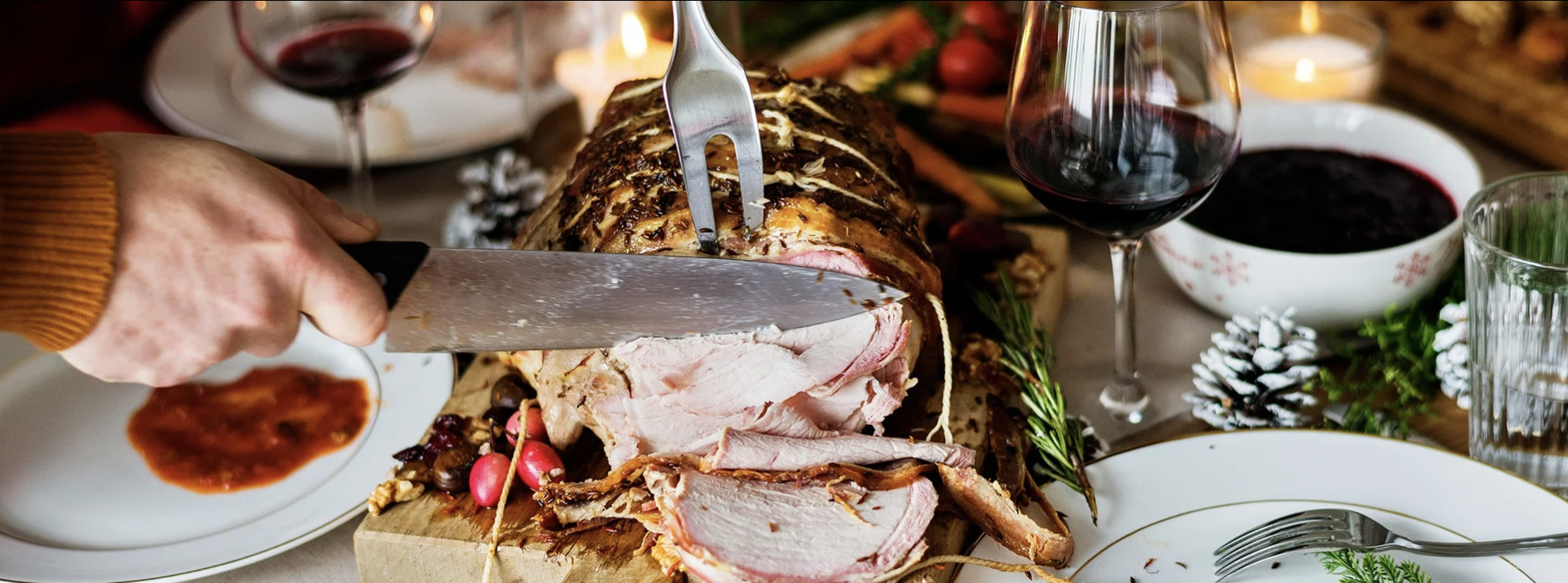
At the centre is meat. Turkey remains the main symbol of the Christmas table, often paired with glazed ham cooked with honey or cloves. In recent years, smaller portions and alternatives have become more common — duck, beef, or vegetarian options. Vegetables follow closely: potatoes, parsnips, carrots, Brussels sprouts. Even when no one truly loves the sprouts, they still belong on the plate. Without them, Christmas feels incomplete.
Desserts are a category of their own. Christmas pudding, mince pies, butter, cream, custard sauces. This is where people are less inclined to cut back. Sweet food is treated as permitted indulgence. Add to that cheeses, crackers, smoked salmon, pâtés — elements that turn the table into a place for slow celebration rather than a single meal.
This year, the cost of the average Christmas grocery shop in Ireland has risen noticeably. For a household of two or three people, festive food spending typically falls between €120 and €180. Larger families often spend €200 to €250 or more, depending on habits and choice of retailer. Many spread purchases over several weeks to soften the impact on monthly budgets.
What stands out is that, despite higher prices, traditions have not been abandoned. People are more cautious, but not colder. They buy fewer excess items, rely more on supermarket own-brand products, yet keep the essentials. This is not performative frugality, but adaptation.
Christmas Day itself remains firmly centred on the home. The 25th of December is a day of family, long lunches, and near-total stillness. Pubs are closed, streets are quiet, and public transport runs at a minimum. It is one of the few moments in the year when the country genuinely pauses. There is a quiet luxury in that — in not spending, not rushing, not consuming experiences.
New Year’s Eve, by contrast, is more restrained than in many other European countries. Dublin hosts festivals, concerts, and fireworks, but there is no deep-rooted culture of large-scale street celebrations. Many people stay in, gather with friends, watch broadcasts, or mark midnight without elaborate plans. New Year does not compete with Christmas here; it plays a secondary role.
When looking at overall seasonal spending — food, gifts, small outings, decorations — average individual expenditure this year is estimated at around €700 to €1,000 for the festive period. This is lower than in the years before the recent surge in inflation, but not dramatically so. Spending patterns have shifted rather than collapsed.
So, does Ireland celebrate lavishly?
The answer is no — but thoughtfully.
Visible extravagance has given way to quieter resilience. Rising living costs, economic uncertainty, and collective fatigue from recent years all play a role. But there is also a cultural reason. Irish Christmas has always been more about atmosphere than display. More about warmth inside the home than scale outside it.
This season does not feel impoverished. It feels measured. Homes are still decorated, gifts are still exchanged, traditional meals are still cooked. What has faded is the urge to compensate anxiety with excess. The celebration has become calmer — and perhaps more honest.
In that sense, the Christmas rush in Ireland reflects a broader national mood. It is not a rejection of joy, but an effort to preserve its shape in a world where many things have become more expensive — not only in euros, but in emotional energy.
Christmas here is still anticipated. It is simply no longer shouted.