
What is more telling than the headline figure is the geographic concentration. The closures were not evenly distributed across the State. Roughly 80 per cent occurred outside the five major urban centres. In several rural counties — Leitrim, Longford, Roscommon, parts of Cavan, parts of Tipperary and parts of Mayo — the cumulative loss of pubs over the past five years now exceeds 25 per cent of the 2019 baseline. The numbers have stopped being a sectoral story and have become, by any reasonable definition, a story about what is happening to rural Ireland.
This is a long-read about what the closures actually mean, what the proximate causes are, and the harder question of what is replacing the institution at the centre of small Irish places.
Why this is happening now
The standard explanation in the industry press is composed of three factors, each of which is real and none of which is sufficient.
The first is cost inflation. The cost of running a small pub in 2026 has risen significantly faster than the price the pub can charge for a pint. Energy costs, insurance premiums, food inputs, equipment maintenance and the rebated VAT rate that was the topic of so much political contention through 2024 and 2025 have, between them, produced a margin squeeze that small operators have not been able to absorb. The Drinks Industry Group estimates the operating cost of a small rural pub has risen by roughly 38 per cent in real terms since 2019, while the median revenue has risen by closer to 9 per cent. The arithmetic does not work.
The second is the demographic curve. Rural Ireland has aged faster than urban Ireland for thirty years. The customers who reliably populated a small pub in the 1990s and 2000s have, in significant numbers, died, moved or stopped going out. The younger replacements have not arrived in the same numbers, and the ones who have arrived have different habits. The pub-going generation of 2026 is, in most rural villages, statistically smaller than the pub-going generation of 2010. This is a slow-moving force, but slow-moving forces eventually compound.
The third is the alcohol consumption trajectory. Per-capita alcohol consumption in Ireland has been declining since around 2001. Younger Irish adults drink meaningfully less than older Irish adults, and the gap is widening. The trend is, on health grounds, almost entirely positive. The economic implication for pub-anchored hospitality is more difficult. A business model built around the assumption of consistent alcohol revenue per visit faces structural pressure when the alcohol revenue per visit is falling year on year.
These three forces explain the closures at a sectoral level. They do not explain why the closures matter beyond the sector, and the latter is the more important question.
What a rural pub does that nothing else replaces
In the major Irish cities, a pub closing is a commercial event. The space will be filled by another bar, by a coffee shop, by a Cuban restaurant or by a co-working space. The economic ecosystem absorbs the change without dramatic civic consequence. The bar across the road continues to function as an alternative.
In a rural village of three hundred people, the pub is rarely just a pub. It is, in practice, the only public indoor space in the village that is not a school, a church or a sports clubhouse. It is the meeting venue for the local soccer club, the Tidy Towns committee, the funeral planning conversations, the community alert group, the elderly residents' Tuesday afternoon coffee meet, the place where the local councillor holds informal clinics, and the place where the lifelong friends of the deceased gather after a wake.
When that pub closes, the village does not simply lose a business. It loses the only piece of public infrastructure that was capable of hosting the unstructured social life of the community. The school remains. The church remains, though attendance is falling. The sports clubhouse remains, though it is typically tied to a single sport with a limited age range. None of these spaces are, in practice, substitutable for what the pub was doing.
Recent qualitative research from the ESRI's regional development unit, combined with multiple rural community studies from the Department of Rural and Community Development, has converged on a finding that is now consistent across most of the studies. The closure of the village pub correlates with a measurable acceleration of out-migration of working-age adults from the village, with reduced participation in voluntary community organisations, and with reduced uptake of available social services among older residents. The pub is not, by itself, the cause of these effects. It is the institution that, when present, slowed them. When the institution leaves, the slowing function leaves with it.
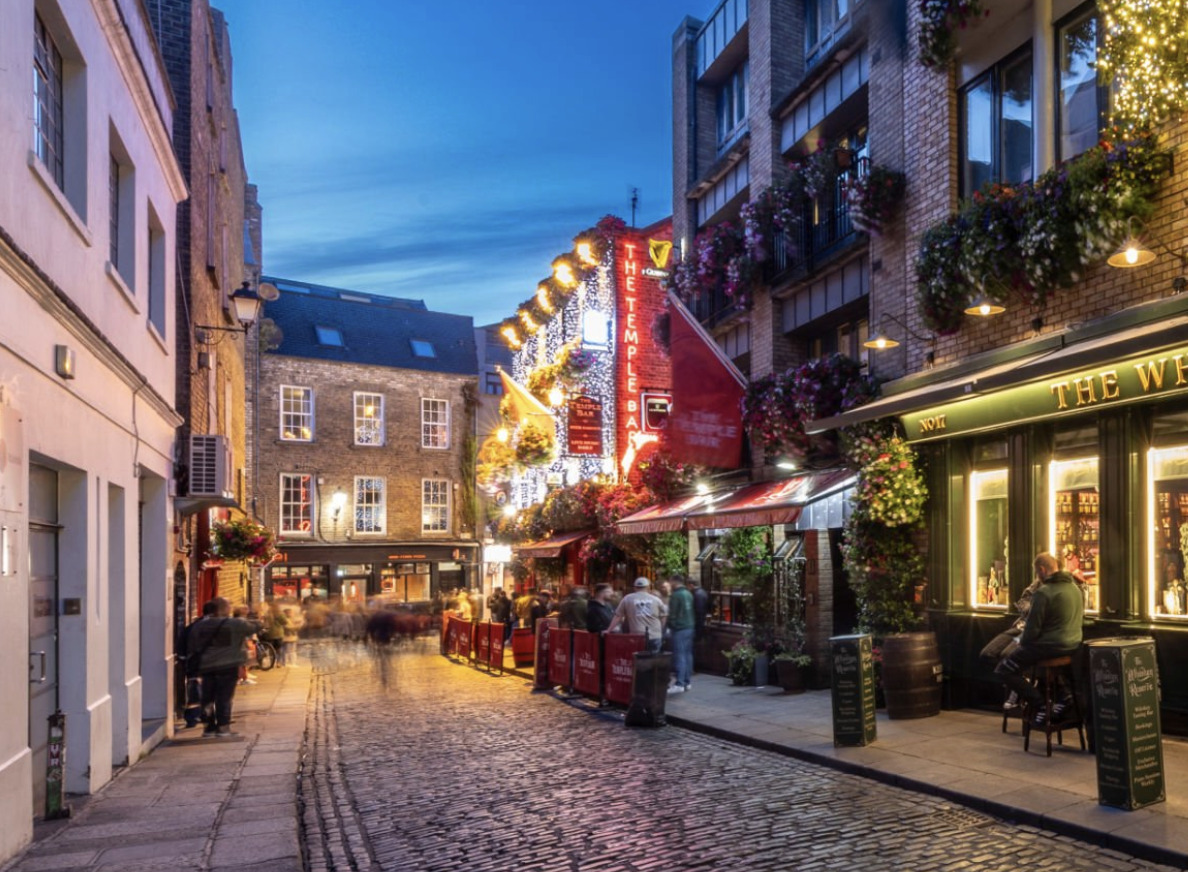
What is replacing the pubs
Three patterns are visible across the rural Irish villages that have lost their pubs over the past five years, and the patterns are worth naming because they are starting to suggest the shape of whatever the next institution will be.
The first pattern is the multi-purpose community building funded through a combination of the Department of Rural and Community Development's Town and Village Renewal Scheme, the LEADER programme and local fundraising. These buildings have, in places, succeeded in hosting some of the functions the pub used to host. They lack, in most cases, the unstructured everyday accessibility of the pub. You go to a community building for a scheduled event. You went to the pub because it was open.
The second pattern is the rural coffee shop. The success rate is mixed. The economic viability of a small coffee shop in a village of three hundred is challenging at the best of times. The ones that have worked have, in most cases, succeeded by attaching themselves to a tourism flow or by accepting that the proprietor is choosing the work over the income. The category is interesting because it is, in some respects, a return of the daytime social function that the pub had moved toward in its final years before closure. It does not, however, replace the evening function.
The third pattern, less visible but probably more durable, is the digitisation of village social life. WhatsApp groups, local Facebook pages and a small number of community apps have absorbed the practical coordination work that used to happen at the pub. The work itself is being done. The face-to-face component of it is not. Whether this matters for community resilience is the open question, and the available evidence suggests that it does, although the mechanism is hard to quantify.
None of these replacements, individually or together, is sufficient. The village that has lost its pub has lost something that has not been replaced.
What the policy response could do
The Government has, through three successive Budgets, made incremental adjustments to the cost base for small hospitality businesses. The reduced VAT rate that was the subject of intense lobbying through 2024 and 2025 was partially restored, though not to the level the industry argued for. Excise duty has been frozen in nominal terms. Insurance reform, which has been promised for nearly a decade, has produced some real reduction in premium costs over the past two years. None of these measures has been sufficient to reverse the closure trajectory, and none was specifically targeted at the rural pub.
The most serious policy proposal that would address rural pubs specifically is the rural hospitality designation that the Vintners Federation has been advocating for since 2023. The proposal would create a separate regulatory category for pubs in places below a population threshold, with different VAT, insurance and licensing arrangements designed to reflect the much narrower commercial base these pubs operate against. The proposal has political support across at least three parties but has not been adopted by the current Government. It is, by industry estimates, the single policy intervention that would have the largest effect on the closure rate.
The other policy lever is the community ownership model that has been deployed successfully in parts of Scotland and the north of England. Under the model, a closing pub is offered to the local community for purchase, with state support for the acquisition and operational structure. A small number of Irish pubs have been preserved through ad hoc versions of this model, but no national framework currently exists. Constructing one would be a meaningful policy commitment with predictable rather than speculative results.
What this story tells us about Ireland in 2026
The pub closure trajectory is not, in itself, the most important story unfolding in rural Ireland. The housing crisis is more acute. The demographic shift is more determinative. The reduction in agricultural employment is more direct. The pub closure story matters because it is the most legible early-warning signal of the cumulative effect of all the other forces, and because the pub is the institution whose loss is felt first in everyday life.
A village can survive the closure of its pub. Many villages have. What no village seems to survive in the long run is the closure of its pub combined with the closure of its primary school, the loss of its post office and the migration of its working-age adults to the cities. The pub is one element of a multi-element system. When the element fails, the system becomes more fragile.
The Government has, through its rural development planning documents, committed to "balanced regional development" for as long as those documents have existed. The closure statistics are now a measurable counter-indicator of how that commitment is performing. The question for the rest of 2026 is whether the policy response will move from incremental cost adjustments toward the structural reforms that the trajectory now demands. The numbers will not wait for the politics to catch up.
The pub, like the village it served, was an institution that took centuries to build and is being lost in roughly a generation. What replaces it has not yet been named. The naming is, at this point, the work that matters most.