
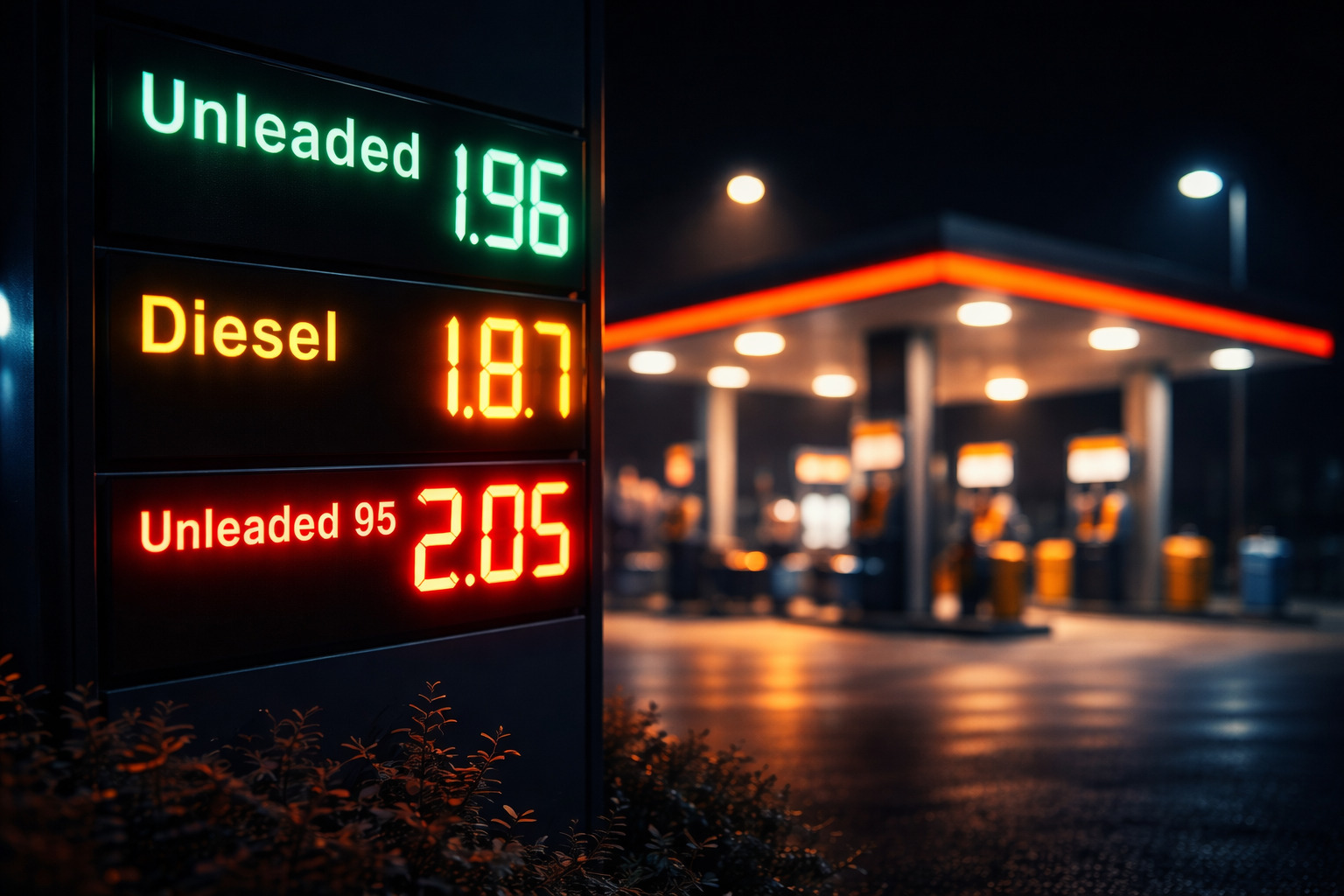
At first glance, the situation carries an unmistakable sense of déjà vu — the same sudden disruption, the same pressure on costs, the same calls for coordinated government action. The memory of the pandemic is still too recent to ignore these parallels.
But beneath the surface, the difference is fundamental. What we are seeing now is not a crisis of uncertainty, but a crisis of management. During the pandemic, governments were reacting to a threat they did not fully understand. Today, the challenges — while complex — exist within a framework that can be analyzed, modeled, and, to some extent, anticipated.
And that shift is shaping the response. The refusal to return to lockdown-style restrictions is not merely political positioning. It signals a deeper change in governing logic. States are no longer willing to halt economic activity as a primary tool of control. The priority has shifted — from prevention at any cost to managing impact with precision.
This is a more mature approach, but also a more fragile one. It relies less on broad, blunt interventions and more on targeted decisions. Less on sweeping restrictions and more on calibrated policy. And crucially, it places greater responsibility not only on institutions, but on individuals and systems to adapt in real time. For now, that balance is holding. But the real question is no longer whether restrictions will return. It is how long this system can sustain stability without them.
A Different Kind of Crisis
What makes this crisis structurally different from Covid is not its scale, but its mechanics.
During the pandemic, governments controlled demand. Mobility restrictions, travel bans, and shutdowns directly reduced economic activity in order to stabilize public health systems.
The current energy crisis operates in the opposite direction.
Demand remains intact — and in many cases, growing — while supply is under pressure. Infrastructure damage, geopolitical instability, and logistical disruptions are constraining energy flows in ways that cannot be quickly reversed.
According to estimates from the International Energy Agency, even if geopolitical tensions were resolved immediately, it could take up to 12 months to restore affected infrastructure and stabilize supply chains.
This creates a prolonged period of volatility.
Not a shock.
But a sustained imbalance.
The Real Pressure Point Is Not Energy Itself
Energy is only the first layer.
The deeper concern is transmission.
Fuel and electricity costs feed directly into transport, manufacturing, and food production. When energy prices rise by double digits, the effect cascades through the economy with a delay — but with precision.
Already, analysts warn that sustained energy inflation could push food prices higher, reversing recent stabilization trends. In parallel, sectors such as agriculture, logistics, and fisheries — all heavily dependent on fuel — are experiencing immediate cost pressure.
Historically, energy shocks have acted as multipliers rather than isolated events.
And this time is unlikely to be different.
Why Governments Are Holding the Line
Despite the scale of the increase, governments across Europe are resisting the idea of behavioral restrictions.
The reasoning is both economic and political.
Unlike during Covid, restricting mobility would not solve the underlying issue. It would reduce consumption temporarily, but at the cost of economic contraction. And with most European economies still in a fragile growth phase, that trade-off is far less acceptable.
Instead, the current strategy focuses on three pillars:
- diplomatic de-escalation of geopolitical tensions
- targeted financial measures such as fuel tax adjustments
- encouraging voluntary energy conservation
This approach reflects a broader shift in crisis management.
What is changing is not only the response to this specific moment, but the logic behind modern crisis governance itself. In earlier emergencies, control was often the primary tool: limit movement, reduce activity, impose restrictions. Today, the preference is increasingly different. The focus is on adaptation — on keeping systems running, managing volatility, and adjusting behavior through infrastructure, coordination, and targeted responses rather than broad limitations.
A System Operating at Its Limits
What makes the current moment particularly sensitive is not the shock itself, but the condition of the system receiving it. Energy markets were already operating with reduced margins of flexibility long before this latest disruption. The ongoing transition toward renewables — necessary and irreversible — has introduced a layer of structural complexity that the system has not yet fully absorbed.
Intermittent generation, uneven grid capacity, and infrastructure gaps across regions have created a landscape in which supply is less stable and less predictable than in previous decades. At the same time, demand is not stabilizing — it is accelerating.
Global energy consumption is projected to continue rising by approximately 1–2% annually through the end of the decade, driven by industrial expansion, electrification, and the digital economy. This produces a structural imbalance: a system in transition, still incomplete in its design, attempting to meet demand that is both growing and increasingly inflexible.
The tension is not cyclical. It is embedded.
Why There Are No Restrictions
This is where the policy response begins to diverge sharply from the logic of previous crises. Lockdowns were effective during the pandemic because they directly targeted the mechanism of transmission. They addressed a behavioral variable — human interaction — and therefore could interrupt the chain of cause and effect.
Energy systems do not operate on that logic. Their constraints are physical, infrastructural, and global. Reducing mobility does not increase generation capacity. Limiting consumption at the margins does not resolve supply bottlenecks rooted in production, distribution, or geopolitics. At best, broad restrictions would redistribute pressure temporarily; at worst, they would compound economic strain without addressing the underlying imbalance. Governments are not rejecting restrictions out of complacency, but out of recognition that the tools used in one type of crisis are ineffective in another.
What Happens Next
The more plausible trajectory is not abrupt intervention, but controlled adaptation. The impact will diffuse across the system rather than concentrate in a single moment. Households will experience it through sustained cost increases. Businesses will adjust through margin compression and operational recalibration. Governments will intervene selectively, attempting to stabilize without interrupting economic continuity. Volatility is likely to persist, but within a managed range. Only a shift from price pressure to actual supply shortages would force a more aggressive response. For now, that threshold remains unbroken, and policy is calibrated accordingly.
Conclusion
The defining tension is no longer between crisis and stability, but between control and resilience. What distinguishes the present moment is not the severity of disruption, but its nature. This is not a shock that can be paused or contained through intervention. It is a system under sustained pressure, requiring continuous adjustment rather than episodic response.
Energy costs are not an isolated variable. They propagate through the entire economic structure, influencing production, pricing, and behavior at every level.
There is no reset mechanism.
Only management.
And within that reality, the strategic choice becomes clear: not to halt the system, but to allow it to absorb and redistribute pressure over time. Not restrictions, but adaptation.