
This article includes gambling-related content. Irishblogs.ie is committed to providing accurate and responsible information. To ensure the highest standards of quality and safety, all gambling-related content is curated and verified by industry experts. Please engage responsibly!
A pattern that spans the whole world
The historical record is almost monotonous in its consistency. In Mesopotamia, the Royal Game of Ur, played around 2600 BCE with tetrahedral dice, is one of the oldest board games ever recovered — and surviving cuneiform tablets even describe wagering on its outcomes, making it among the first documented gambling games in history. In Egypt, the game of Senet was already being played more than five thousand years ago, its moves determined by throwing flat casting sticks, and by the New Kingdom it had become bound up with the journey of the soul through the afterlife.
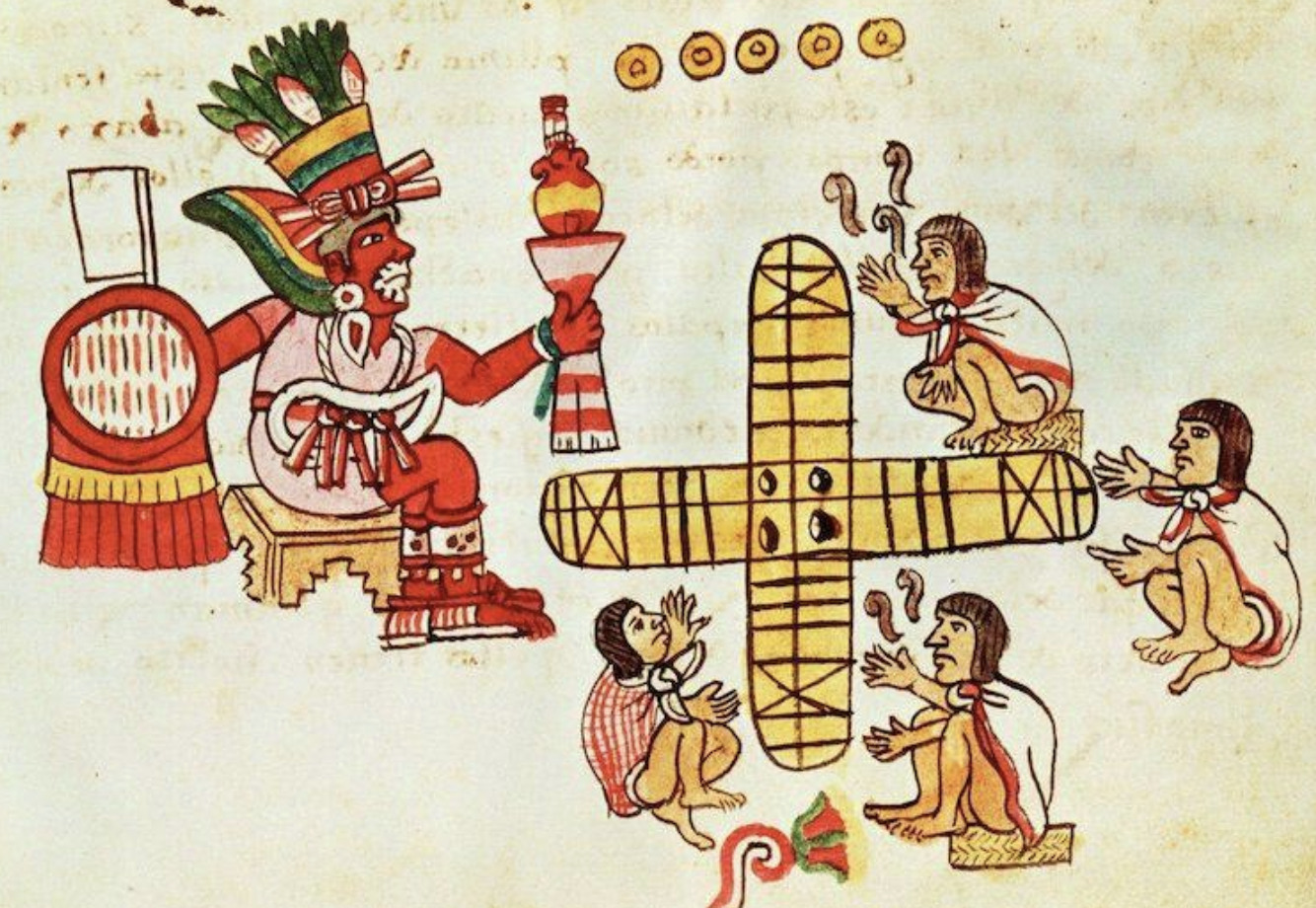
Travel east and the pattern holds. The sacred texts of ancient India are haunted by dice: the Rigveda contains a famous lament of a gambler ruined by the dice he cannot resist, and the great epic of the Mahabharata turns on a rigged dice game in which a king wagers and loses his kingdom, his brothers, and his wife. In China, tiles and lots appear early, and a lottery-like game of chance is traditionally said to have helped fund great public works of the state. Cross the Atlantic, where no contact with the Old World was possible, and the Aztec and Maya played patolli, a board game of pure chance decided by throwing marked beans, wagered on heavily and watched over by its own divine patron. The Romans, for their part, rattled dice in taverns despite repeated laws against it, bet on chariots in the Circus Maximus, and gambled openly during the festival of Saturnalia.
No diffusion theory can explain this. The Aztecs did not learn patolli from Egypt, and the authors of the Rigveda had never heard of the Royal Game of Ur. The only explanation that fits is that something in the human mind itself keeps reaching for chance. Three deep forces, working together, seem to account for it.
The first reason: chance was the voice of the gods
The oldest games of chance were rarely "just games." In a world without science, randomness was not understood as meaningless. It was understood as a message. When no human agency decided an outcome, the decision was assumed to belong to something higher — fate, the gods, the order of the cosmos. Casting lots was therefore a way of asking a question and receiving an answer that no human could be blamed for.
This is why, in culture after culture, the tools of gambling and the tools of divination are the same tools. The knucklebones the Greeks and Romans threw for fun were also thrown at shrines to read the will of the gods, with tables assigning a prophetic meaning to each combination. Lots were cast to divide land, choose officials, and interpret omens. The line between sacred sortilege and a wager for money was almost invisible, because both rested on the same conviction: that the fall of the dice revealed something true that ordinary reasoning could not reach. Games of chance, in other words, may have been born partly as religion. To play was to brush against the divine, and the thrill of that contact never entirely faded, even as the gods receded.
The second reason: the mind is built to crave uncertainty
Strip away the religion and a second, more biological force remains. The human brain is exquisitely tuned to respond to uncertainty, and it responds with pleasure. Modern neuroscience has shown that the anticipation of an unpredictable reward drives the brain's reward system harder than a predictable one does. A certain outcome is information; an uncertain one is an experience. The interval between the throw and the result — that small, charged silence — is one of the most reliable sources of excitement a human being can manufacture on demand.
Every game of chance is engineered, knowingly or not, around this fact. It creates a clear stake, a moment of suspense, and a resolution, compressing the structure of a story into a few seconds. The "near miss," the outcome that lands one step from winning, is so compelling precisely because the brain treats it almost like a win, urging another attempt. This is also why games of chance can tip into something harmful: the same machinery that makes uncertainty delightful can make it difficult to stop. But in its ordinary form, the appetite for the unpredictable is simply part of being human, as old as the species and as widespread. We do not gamble despite the uncertainty. We gamble because of it.
The third reason: a safe rehearsal of risk
There is a third, more social explanation, and it may be the most pragmatic. Life in every age has been governed by risk — the failed harvest, the lost voyage, the unpredictable enemy. A game of chance is risk in miniature, a way to feel the rush and the consequence of an uncertain outcome within safe and agreed-upon limits. At the gaming board, fortunes rise and fall in an afternoon, hierarchies are briefly suspended, and everyone submits to the same impartial randomness. Rich and poor, noble and commoner, sit equal before the dice.
That leveling, ritual quality gave games of chance a genuine social function. They bound communities together, redistributed small amounts of wealth, provided shared drama, and let people practice the emotions of risk-taking without betting the harvest itself. A culture that played games of chance was, in a sense, rehearsing how to live in a world it could not control.
The same impulse, now digital
Put those three forces together — the sacred awe of the unknown, the brain's hunger for uncertainty, and the social thrill of shared risk — and the universality stops being mysterious. Of course every civilization invented games of chance. They were tapping the same deep vein.
And they are still tapping it. The digital age has not invented a new desire; it has built a new delivery system for a very old one. The random number generators that power online gaming are the direct descendants of the knucklebone and the throwing stick, and the suspense a player feels today is the same suspense felt over a board in Ur or a dice cup in a Roman tavern. Platforms such as Shikaka Casino are simply the latest chapter in a story that began before recorded history — the same human attraction to the unpredictable, translated into software and made available on a screen. The tools have changed beyond recognition. The impulse has not changed at all.
What the dice have always told us
Run the thread from a Sumerian gaming board to a modern app and the continuity is astonishing. The materials evolve, from bone to wood to silicon. The meanings shift, from divine message to pure entertainment. The settings move from temple to tavern to palace to phone. But the human being at the center — leaning in, waiting to see how it falls, feeling that flicker of hope and fear — is recognizably the same person across five thousand years.
That is why every civilization invented games of chance. Not because they copied one another, and not by accident, but because the fascination with uncertainty is written into us. It is one of the rare experiences that connects a Babylonian scribe, an Aztec noble, a Roman soldier, and a person tapping a screen today. The dice keep telling us the same thing they always have: that we are creatures who cannot resist asking the future a question, and waiting, breath held, for the answer.
Games of chance should be enjoyed as entertainment, never as a way to make money. Set a budget you can afford to lose, never chase losses, and use the responsible-gambling tools available to you. If gambling stops being fun, free and confidential support is available through national problem-gambling helplines.7