
This article includes gambling-related content. Irishblogs.ie is committed to providing accurate and responsible information. To ensure the highest standards of quality and safety, all gambling-related content is curated and verified by industry experts. Please engage responsibly!
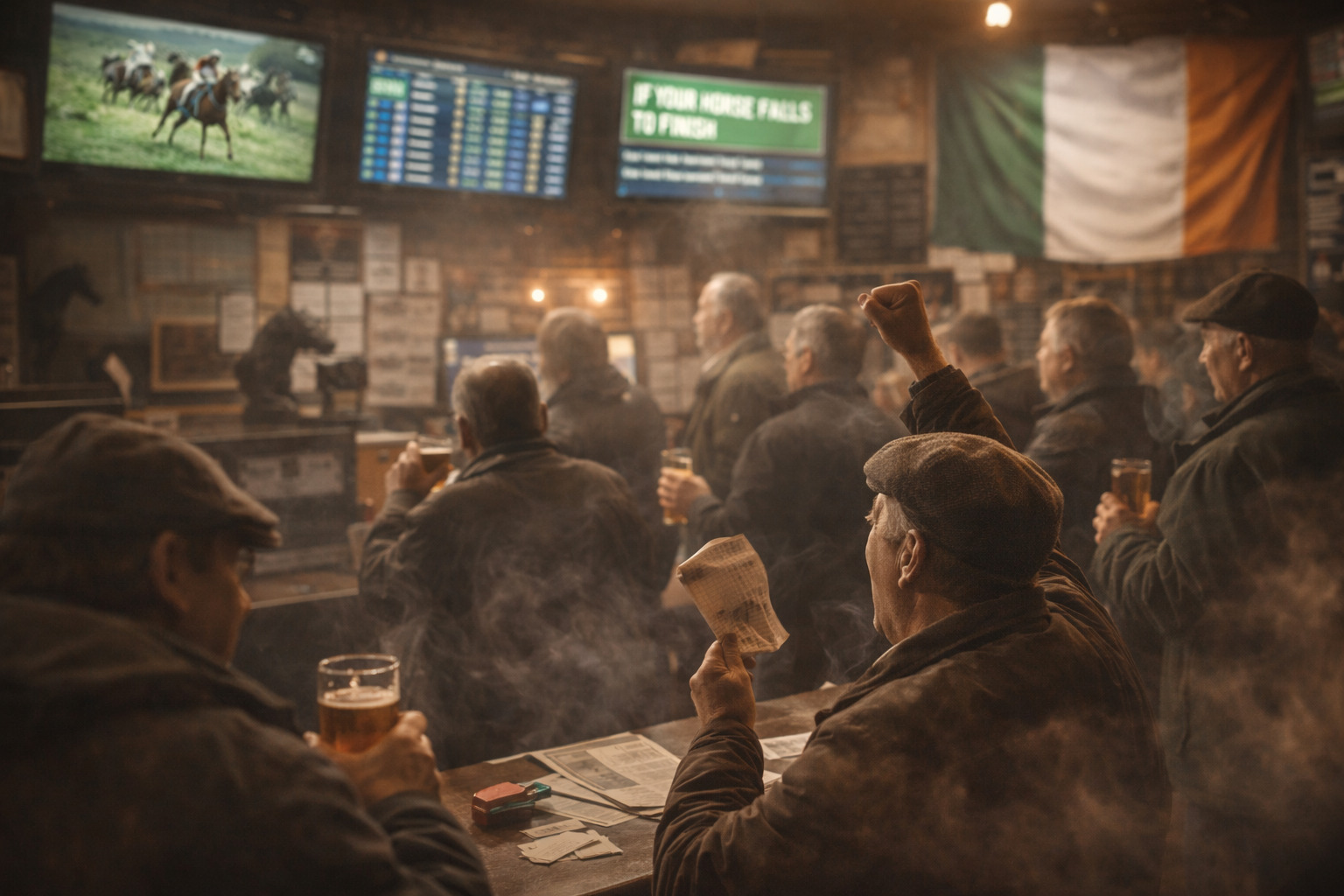
By 2026, a growing share of Irish players no longer experience gambling as a form of entertainment. Instead, it feels closer to using a regulated digital service — something transactional, monitored, predictable, and quietly constrained. Not because players have lost interest in risk, but because the environment around them has fundamentally changed. What is happening is subtle enough to escape headlines, yet deep enough to reshape behaviour. The modern Irish gambling user does not arrive seeking adrenaline. They arrive seeking frictionless functionality. The expectation is not excitement but stability. The question is no longer “What might I win?” but “Will this work smoothly, and without surprises?”
This shift is visible in the smallest details of user behaviour. Take payments. Irish players increasingly favour debit cards, instant bank transfers, and trusted domestic payment rails over experimental or opaque methods. There is a noticeable impatience with anything that feels improvised. If a deposit takes longer than expected, trust erodes immediately. If a withdrawal is delayed without explanation, the emotional response is not anger but disengagement. The player doesn’t argue; they simply leave. This is not the behaviour of someone “playing.” It is the behaviour of a consumer interacting with infrastructure.
The same pattern appears in session habits. Where older models encouraged long, immersive sessions built around momentum, Irish users today tend to fragment their activity. Short logins. Clear endpoints. Defined limits. Many log in with a specific purpose and leave once it is fulfilled. The platform is not a space to linger; it is a tool to be used.This reflects a broader cultural rhythm. Ireland’s digital life is already shaped by regulated services: banking apps, government portals, healthcare systems, utilities. Gambling platforms are now being mentally grouped alongside these experiences. They are expected to behave with the same clarity, the same restraint, the same respect for boundaries. Regulation plays a role, but it does not tell the whole story. Affordability checks, identity verification, and spending limits certainly introduce friction. But what is striking is how quickly Irish users have internalised these constraints. They are no longer perceived as external impositions. They are part of the environment — like speed limits on a familiar road. You notice them only when they are absent.
This internalisation changes psychology. When risk is framed, quantified, and occasionally denied by the system itself, the player stops performing risk. They stop testing boundaries for emotional effect. Instead, they adapt. They optimise. They behave conservatively not because they are forced to, but because the system rewards predictability.
In anthropological terms, this is a classic example of environmental shaping. Change the structure, and behaviour follows.
One can see this in how Irish players respond to automated interventions. When a session is paused, a limit is reached, or a verification step appears, the reaction is rarely confrontational. There is no sense of being cheated or challenged. The system is treated as neutral authority — impersonal, but legitimate.
This is a crucial difference from earlier eras, when restriction felt like interruption. Today, restriction feels procedural. The emotional language has shifted accordingly. Players speak less about wins and losses and more about “issues,” “delays,” and “support tickets.” Satisfaction is measured not in excitement but in resolution speed. Trust is built not through spectacle but through consistency. In this environment, gambling loses one of its defining characteristics: illusion. There is little room left for fantasy when every action is logged, monitored, and contextualised. The platform does not invite escape; it enforces awareness. This does not mean gambling has become safer in any absolute sense. Risk remains. Loss remains. But the way risk is experienced has changed. It is no longer theatrical. It is administrative.
For Irish operators, this creates a paradox. The very systems designed to protect users also flatten emotional engagement. The industry gains stability but loses intensity. Growth becomes slower, more linear, more dependent on trust than temptation.
From a business perspective, this is not necessarily a loss. A player who no longer “plays” may still stay. They may deposit less, but they churn less. They may engage quietly, but over longer periods. The relationship becomes contractual rather than emotional. This mirrors changes seen in other sectors. Retail banking once relied on personal relationships and local presence. Today, it is an app. Healthcare increasingly functions through portals and protocols rather than direct access. Gambling is following the same path, whether the industry fully acknowledges it or not. What makes Ireland particularly interesting is how naturally this transition fits the national temperament. There is little appetite for extremes. Excess draws scrutiny. Quiet competence is valued. A gambling environment that behaves like a well-run service aligns with this sensibility far better than one that demands attention. The result is a new kind of user. Not a thrill-seeker. Not a rebel. Not even a “player” in the traditional sense. More accurately, this is a participant in a managed system. Someone who understands that the system will intervene, sometimes arbitrarily, and accepts that as part of the deal. Someone who measures value not in emotion but in reliability.
This is why the most important change in Irish gambling today is not visible on the surface. It is happening inside the user’s expectations. The player no longer asks for excitement. They ask for predictability. They no longer test limits. They assume them. They no longer feel like they are playing a game. They feel like they are using a service — and judging it accordingly. And once that shift is complete, it is almost impossible to reverse.